

Do you ever get the feeling that you are winning a race you didn’t actually sign up for?
You know the one. You study hard, get into a good school, land a “prestigious” job (maybe in a law firm or an investment bank) and suddenly, you are on a treadmill. The goals are clear: a slightly bigger car than your neighbour’s, a vacation that looks better on Instagram, and reservations at that one restaurant everyone is talking about.
It is the “Standard Path.” And according to Rutger Bregman, author of Moral Ambition, it is where most of the world’s brightest minds go to disappear.
Bregman points out a startling trend: a massive chunk of students from elite universities roughly 80% end up in high-paying, high-status roles that, if we are being honest, don’t exactly move the needle for humanity. These aren’t “bad” people. They aren’t immoral or mustache-twirling villains. They are just… conforming. They are living within the constraints of what society told them “success” looks like.
But there is a quiet crisis happening in that conformity: a lack of consciousness. We have traded impact for comfort, and it is worth asking if the trade was actually worth it.
The theoretical blind spot
When we talk about the world’s wealth and resources, we usually focus on the extremes. Our economic theories are actually built that way.
Think about it: Modern Capitalism often feels like it was designed by and for the Top 1% which focuses on shareholder value, market dominance, and the “titans of industry.” On the other end, Socialism (and Communism) traditionally ground their entire moral weight in the plight of the Bottom 10%, focusing on extreme poverty and the struggle for basic survival.
Because our theories focus on the poles, our institutions and policies follow suit. We have laws to protect the assets of the ultra-wealthy and social safety nets (however frayed) to help the ultra-poor. But this leaves a massive “purpose vacuum” for everyone in between.
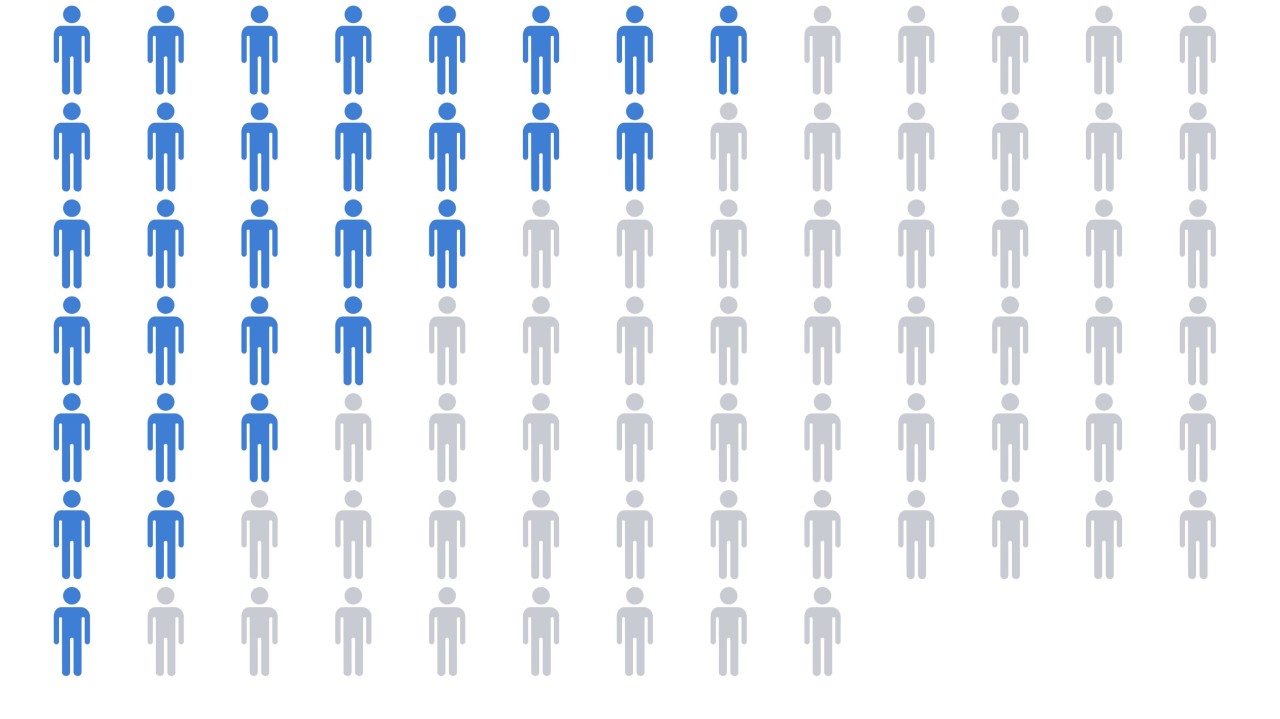
Once you move past the extremes, you find the bulk of humanity:
- The 50%: Roughly half the global population makes up the middle class—people working hard and staying afloat, but often just one major life crisis away from financial instability. Their primary ambition, understandably, is security.
- The 39%: This is the group that often gets overlooked. These are people with privilege, reasonable resources, and relative security.
The Brainpower Tax
If you are leisurely reading this on a smartphone with a stable internet connection, chances are you are in this 39% bracket.
For consumer goods companies, this group is the ultimate prize. You are the target for every luxury watch, every “organic” skincare line, and every high-end kitchen appliance. The world is designed to keep this segment satisfied, comfortable, and most importantly distracted.
When you are comfortable, it is easy to let your ambition shrink. It stops being about “How can I solve a problem?” and starts being about “How can I out-do the person in the next cubicle?”
The problem with the 9-to-5 grind in elite sectors isn’t that it is “evil.” The problem is the opportunity cost.
Imagine thousands of the world’s most capable, well-resourced people spending 60 hours a week optimizing tax loopholes for corporations or trading complex financial instruments that have no baseline value to society. That is a staggering amount of brainpower being taken off the table.
We have been taught that as long as we aren’t “bad” people, we are doing fine. We pay our taxes, we don’t litter, and we are nice to our baristas. But “not being a jerk” is a pretty low bar for someone with the privilege of education and resources.
The 39% of us who aren’t worried about our next meal have something the rest of the world doesn’t: the bandwidth to care.
We have the “slack” in our lives to look up from our screens and ask, “What is actually happening in the world, and what can I do about it?” without being woke.
The three pillars of conscious ambition
For this “Global Talent Class” or the 39% of the population, the biggest moral question isn’t about survival; it is about purpose. To find it, we need to update our understanding of three things: our self, our world, and our impact.
1. Understanding the self
When we talk about privilege, the immediate reaction is often guilt. We see images of suffering in places like Gaza, where people are struggling for food and safety, and we feel a pang of shame for our own comfort.
But here is the hard truth: Awareness of privilege shouldn’t lead to guilt; it should lead to peace. The fact that others are suffering doesn’t mean you should stop eating or abandon your comfort. Guilt is a heavy, paralyzing emotion that helps no one. True self-understanding means acknowledging that you were born into a specific set of circumstances with a “head start.” Once you acknowledge that, the internal noise stops. You don’t have to apologize for your resources; you just have to decide what to do with them. When you stop acting out of guilt and start acting out of clarity, you find a sense of internal peace that a “bigger car” could never provide.
2. Understanding the world
Most of us live by social and cultural rules that were written decades, if not centuries, ago. We are caught between the ‘carpe diem’ of instant gratification and the ‘memento mori’ of stoic detachment, leaving us confused in a society that keeps redefining “happiness.
Many of these rules are just legacy software. Consider Credentialism: we are raised to believe our value is tied to brand names—the car, the clothes, the degree. This creates a culture where we prioritize appearing successful over being impactful. We spend our best years waiting for a “permission slip” to do something meaningful that may never come.
Then, there is the Comparison Cycle. This is perhaps the most pervasive script of all. It tells us that life is a zero-sum game: for me to be doing well, I need to be doing better than the person in the next cubicle or the next zip code. Whether it is the size of a house or the prestige of a child’s school, we are pushed to take part in a race where the finish line keeps moving.
When you understand that the world is imperfect, you realise you have a choice. You can choose to opt out. You can look at the “rules” of prestige and decide they don’t apply to your definition of a good life. Understanding the world means realising that you aren’t just a passenger in society; you are a co-author.
3. Understanding the impact
Why should we care about “giving back”? In our current system, we’re told to do it for external validation—the tax write-off, the “Impact Award,” or the LinkedIn post.
But the drive to help humanity isn’t about looking good to others; it is an innate human need. Human beings aren’t built just to survive and accumulate; we are built for meaning. There is a “consciousness calling” within us that whispers that we are meant for more than just self-preservation. Helping others satisfies a deep, biological itch for connection and significance. When we contribute to something that helps mankind, we aren’t “doing a favour” for the world. We are fulfilling a requirement for our own psychological well-being.
The Shift
The “Global Talent Class” or the 39% of us who have the bandwidth to care are standing at a crossroads. We can continue the race for “competitive comfort,” or we can pivot toward moral ambition.
It is okay to want a comfortable life. But don’t let your comfort become a cage for your potential. Imagine if we took the same intensity we use to climb the corporate ladder and applied it to climate change, educational inequality, or global health? What if we stopped trying to “out-do” each other and started trying to “out-impact” each other?
The world doesn’t need more people who are “just doing their job.” It needs a 39% that is awake, aware, and ready to contribute.