

It is the season of offers again, though “season” now feels like an understatement. White Friday sales roll into Thanksgiving discounts, which blend seamlessly into Black Friday, Cyber Monday, UAE National Day promotions, Christmas bundles, and early New Year deals. What once felt like occasional retail events have evolved into a continuous carousel of persuasion. Each week arrives with a new reason to buy something you didn’t know you wanted or, depending on how the algorithm frames it, absolutely needed.
These overlapping waves of generosity are not coincidences. They are meticulously engineered cultural moments like rituals of modern capitalism designed to keep us consuming, clicking, upgrading. In a world of shrinking attention spans and infinite digital stimuli, offers no longer simply respond to demand; they manufacture desire. They blur the line between genuine need, social expectation, and unattainable desires.
Behind this glittering orchestration lies the foundation of economic theory: humans have unlimited wants and limited resources. This classical view, formalised by economist Lionel Robbins, positions economics as the discipline that allocates scarce resources among competing wants. Simple, elegant, rational.
But humans rarely are.
The rise of Behavioural Economics where ‘Needs’ blur into ‘Wants’
Classical economics prefers tidy categories: Needs are essentials. Wants are indulgences.
Reality, however, operates in gradients. A blanket is a need; a weighted blanket is a want; a designer blanket matching your “winter aesthetic” is clearly an aspiration shaped by culture and identity. Yet these distinctions shift with time, lifestyle, and societal norms.
Thorstein Veblen, in the 19th century, called this “conspicuous consumption” with purchases made not for utility but for identity, belonging, and status. A century later, the principle hasn’t changed; only the packaging has. A “limited edition drop” is the modern, sleek equivalent of Veblen’s status goods. We don’t just buy to own; we buy to signal.
As consumer culture became more psychological, it became impossible for economics to pretend that people were cool, rational calculators. Enter the thinkers who transformed the field.
Herbert Simon introduced “bounded rationality”—the idea that humans make decisions with limited information, limited time, and limited cognitive capacity.
Then Daniel Kahneman observed, human choices are not governed by calm rationality but by the interplay of System 1 (fast, emotional) and System 2 (slow, deliberate). Thus our decisions are shaped more by cognitive shortcuts than by reason. What we call “choice” is often a mix of habit, emotion, bias, and context.
Richard Thaler added another layer: the environment of choice influences the choice itself. A nudge here, a default there, a cleverly placed option everywhere.
As neuroscientist Antonio Damasio put it succinctly: “We are feeling machines that think, not thinking machines that feel.”
This is why the law of diminishing marginal returns that suggests each additional purchase gives less pleasure than the one before fails to curb consumption. Emotion overrides logic. Social comparison overrides satisfaction. Desire regenerates faster than fulfilment.
Retailers have embraced these theories enthusiastically. Sales aren’t merely promotions; they are behavioural triggers:
- Anchoring: Showing an inflated “original price” to make the discounted one seem irresistible.
- Scarcity: “Only 24 hours left!”
- Social proof: “1,200 people added this to cart today.”
- Decoy pricing: The mid-priced option that makes the premium look reasonable.
Consumption isn’t accidental. It is choreographed.
Credit, convenience & the illusion of affordability
Layered on top of this behavioural web is the modern financial lubricant: easy credit.
“Buy Now, Pay Later” (BNPL) programs have transformed affordability from a budget constraint into a psychological illusion. A large purchase becomes a harmless monthly nibble. The resistance consumers once felt with lump-sum spending dissolves into painless instalments.
The numbers tell the story.
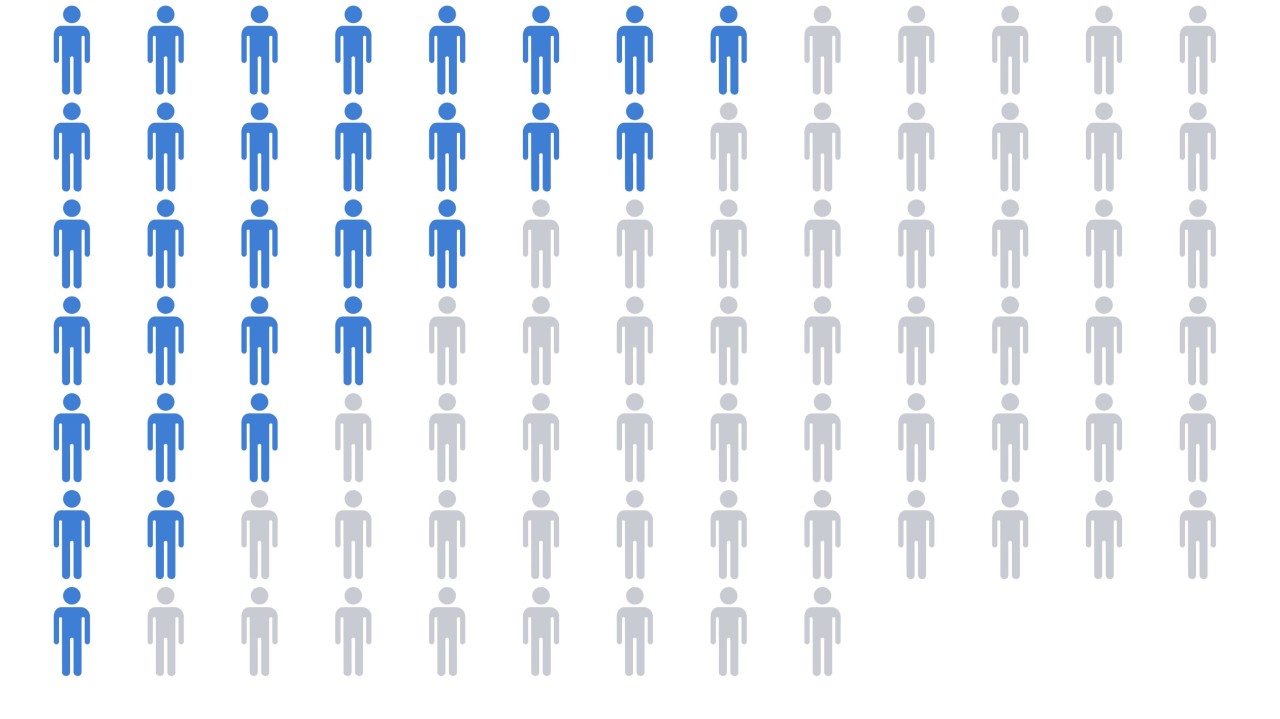
In the 2025 holiday season, BNPL-driven purchases surged worldwide. On Cyber Monday alone, consumers spent over $1.03 billion through BNPL, accounting for more than 7% of all online transactions that day. This isn’t a payment method; It is a behavioural catalyst. It doesn’t just shift when we buy; it expands what we buy.
In fact, the late-stage dynamics of many digital platforms reflect what writer Cory Doctorow calls “enshittification”—the slow erosion of user value as companies optimise for profit. Platforms begin by delighting users, then shift benefits to advertisers and sellers, and eventually squeeze both sides to extract maximum revenue.
It is a behavioural loop powered by the same forces that shape modern consumption: attention, convenience, and the economics of engineered desire.
Many digital platforms no longer provide convenience; they manufacture dependency. They reward impulsiveness, mask consequences, and create artificial valuations that benefit shareholders at the expense of consumers.
These behavioural distortions ripple upward into macroeconomics: rising household debt, distorted demand cycles, and overconsumption disguised as affordability. Retailers understand this. Economists measure it. Consumers feel it in their credit statements!
From micro-choices to macro-patterns
Individually, human behaviour is unpredictable, messy, and deeply emotional. Collectively, the patterns are astonishingly stable.
This is why economics branches into two complementary worlds:
- Microeconomics examines individual decision-making which is messy, emotional, influenced by impulse, identity, and cognitive biases.
- Macroeconomics zooms out to track inflation, GDP, aggregate demand, employment rates, and consumer spending cycles.
One would assume that the rational macro patterns emerge despite human irrationality. But the truth is subtler. Macro trends exist because of these individual irrationalities, not instead of them.
Cyber Week spending in 2025 reached $44.2 billion, up 7.7% from the previous year. Millions of unpredictable individuals collectively produced a perfectly predictable trend.
Retailers forecast sales. Manufacturers forecast retail demand. Global supply chains forecast manufacturing. The earth’s resources, in turn, respond to extraction demands downstream.
Instead of economics shaping consumer behaviour, consumer behaviour increasingly shapes economic outcomes.
This is economic coexistence playing out in real time.
Philosophical Pondering
The core belief that humans have unlimited wants is both true and incomplete. Behavioural economics reminds us that:
- Wants are not fixed. They are shaped, influenced, and often manipulated.
- Needs evolve with culture and technology.
- Short-term emotion often overrides long-term rationality.
A century ago, electricity was a luxury. Today, internet access is arguably a fundamental need. Coffee, once a treat, is now a daily ritual justified as productivity. Conveniences like same-day delivery, digital payments, instant refunds now feel less like comfort and more like necessity.
Amartya Sen’s capabilities approach argues that well-being is not just about resources but the ability to live the life one values. Modern consumption often blurs this line. Are we consuming for capability, comfort or conformity?
The distinction matters less than we think. Because in the end, economics doesn’t judge; it observes. So the question emerges, quietly but persistently:
What truly defines a need in the modern world?
Is high-speed internet a luxury or a requirement for basic participation? Is a gym membership a want or a health necessity? Is convenience a want or has life simply become too complex without it?
We navigate these questions daily, sometimes unconsciously. Culture shapes our definitions; our definitions, in turn, shape the economy
Reflection: The coexistence that shapes economies
When you peel away the layers of sales cycles, psychological nudges, cultural shifts, and credit systems, a clearer picture emerges:
The economy is not an external machine. It is a mirror.
Every small decision, every impulse buy, every delayed purchase, every desire, every restraint, all of it, feeds into a larger pattern. Individual choices create macro trends. Macro trends, in turn, influence individual available choice options.
This is not contradiction. It is coexistence.
We are both participants and products of the economic environment. We shape the trends that later shape us. Our wants fuel industries; industries fuel our wants. Our needs evolve with culture; culture evolves with our needs.
This dance between the individual and the collective, between emotion and logic, between needs and wants is continuous, messy, dynamic, and deeply intertwined.
Coexistence is philosophical at its core, yet visible everywhere, even in our economic behaviours. If we care to look.
This awareness of our intertwined understanding of self and the collective. Of choice and system, Of our individuality and our relationship with our collective can help us bring clarity amid the noise.
If you are like most modern consumers, you will get sucked into the season frenzy. You will spend your time optimising your basket for free delivery. And end up buying more than you need but not enough to make you broke.
Therefore, understanding this dance of co-existence might just be the most rational choice we make in a world designed to keep us wanting more.