

Have you ever finished a day where you were “busy” from sunrise to sunset, yet as you lay in bed, you felt a gnawing sense of emptiness. As if, you actually accomplished nothing at all?
It is a strange, modern sickness. We feel it when we try to explain a brilliant vision to a colleague, only to have it come out sounding fragmented and dull. We feel it when we look at a to-do list of six simple tasks and realize, with a sense of mounting guilt, that it took us eight hours to finish only three.
Why is there such a massive discrepancy between the “me” that exists inside my head and the “me” that interacts with the world?
In our internal world, we are gods of efficiency. We can build cities, solve complex social crises, and write entire novels in the span of a morning coffee. But the moment we try to externalize that world—through speech, through emails, or through physical work; We hit a wall. It feels like trying to download a high-definition movie over a 1990s dial-up connection.
This isn’t just a lack of discipline or a symptom of a short attention span. It is something much more fundamental. We are operating under a set of invisible “bandwidth” constraints that we rarely acknowledge, yet they dictate every frustration, every burnout, and every “joy deficit” we experience in our careers.
To understand why we feel so perpetually behind, we first have to look at the math of our own consciousness.
I. The Anatomy of the Bottleneck
Imagine your consciousness as a funnel. At the top, the opening is massive; at the bottom, the exit is a narrow straw. We operate at four distinct, incompatible speeds:
- The Thinking Speed (15 wps): Research into the “Speech-Thought Differential” suggests we process at roughly 15 words per second or 900 words per minute. This is the speed of pure thought. In this space, the thought and the thinking is inseparable.
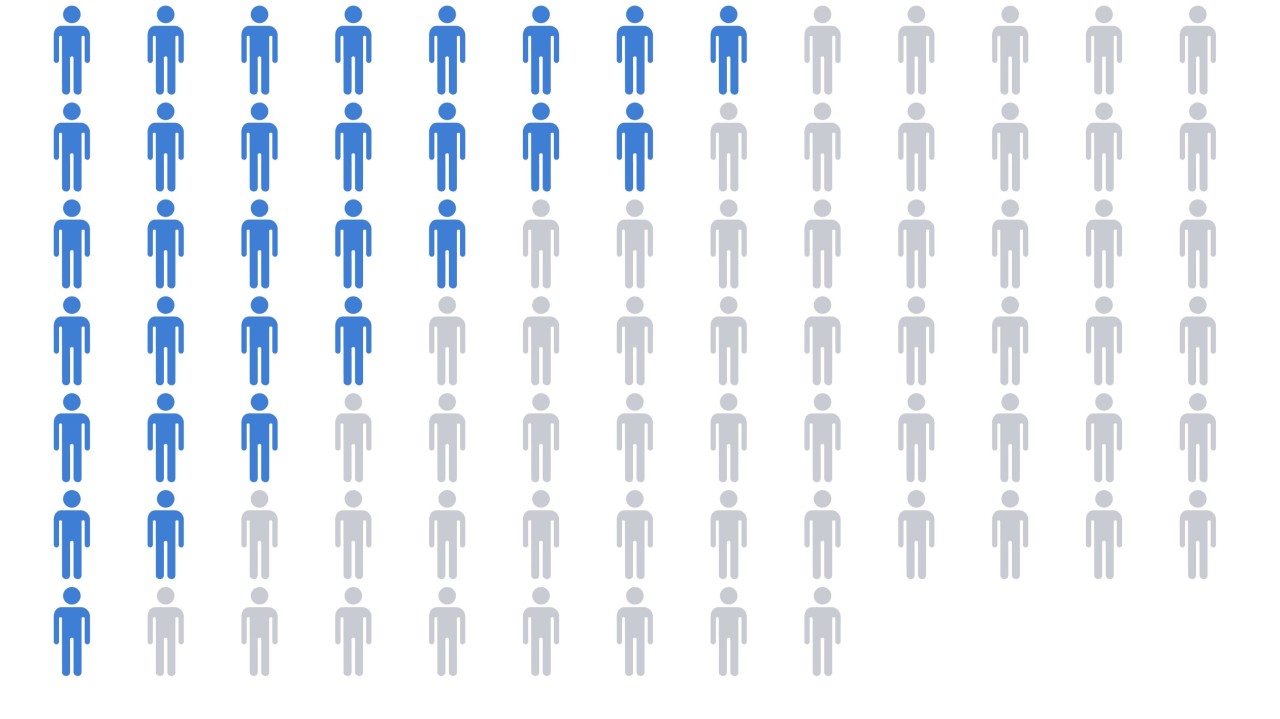
- The Speaking Speed (150 wpm): The first narrowing happens when we share that vision. Our “output port” is governed by the physical limits of vocal cords and breath. As we speak, we discard nearly 80% of the resolution of our original thought which means we are only able to speak about 125-150 words a minute.
- The Working Speed (4–6 Tasks/Hour): If speech is a bottleneck, physical action is a stone wall. Our 900-wpm brain treats “Design the Website” as a single data point, but in reality, that point explodes into a thousand micro-movements—tab switching, typos, and loading screens. Our tasks are governed by billable hours, aren’t they?
- The Results Speed (Years): At the very tip of the funnel lies the Result. We can think of a career change in a second and work on it for a day, but the tangible result of building mastery, reputation, and financial stability that manifests in years.
II. The Science of the Gap
The friction we feel isn’t just a personal failing; it is a mathematical certainty. As Oscar Trimboli outlines in his book Deep Listening, we are caught in a 125/400/900 trap. If the average person speaks at 125–150 words per minute, but the human brain is capable of processing nearly 900, every conversation you have contains a massive, invisible “mental void.”
The Listener’s Gap: A breeding ground for Friction
When you speak to a colleague, you are essentially handing them a 750-word-per-minute “surplus” of mental energy. Their brain, an organ designed for high-speed processing, cannot simply sit idle. It must spend that energy. Because we aren’t aware of this gap, we don’t spend it on deeper listening. Instead, we use that extra bandwidth to:
- Rehearse the Rebuttal: We use the surplus energy to formulate what we will say next, effectively stopping the listening process halfway through.
- Hyper-Analysing Non-Verbals: Because we have “extra time,” we start reading between the lines. We overanalyse a squint of the eye or a cross of the arms, often projecting intentions or emotions onto the speaker that aren’t actually there.
- Daydream Unconsciously: The brain “flicks” away to a grocery list or a pending email, then flicks back, creating a fragmented and distorted understanding of the conversation.
This is why interpersonal communication feels so draining. We aren’t just communicating; we are constantly trying to manage a “bandwidth overflow” in ourselves and everyone around us.
The Planning Fallacy: The optimism of our brain
This same speed differential is what makes us so spectacularly bad at managing our own time. Daniel Kahneman, in his research on the Planning Fallacy, identifies that we have a biological “optimism bias.”
When we plan your day, we are planning at 900 words per minute. We “see” the finished presentation, the cleared inbox, and the gym session in a frictionless mental flash. We ignore the “base rates”—the historical reality that every time you’ve done these things, it took three times longer than you expected. We aren’t lying to ourselves on purpose. We are simply victims of our own internal speed.
III. The Symptoms
The “Sequential Decay” doesn’t just eat our time; it eats our satisfaction. Because our internal world moves at a frequency entirely different from the physical one, we often find ourselves “ghosted” by our own achievements.
The Ghost of the Former Self
Think of a major achievement you recently achieved like a promotion, a finished project, or a personal milestone. Now, think back to the person who originally conceived of that goal years ago. That version of you was the one who craved the reward. But because results move at the “Speed of Years,” by the time the achievement actually lands, that version of you no longer exists.
You have aged, your environment has shifted, and your priorities have evolved. You are essentially receiving a gift meant for a stranger you haven’t been for a long time.
This is the Joy Deficit: a fundamental misalignment between the timing of the effort and the timing of the reward.
The Shifting Goalpost
Because our minds are frictionless, we don’t just stop at one vision. While your body was busy doing the grinding work required to reach the first milestone, your mind was already busy generating dozens of new horizons.
By the time the first goal is accomplished, your mind has already checked out and moved miles down the road. The achievement doesn’t feel like a victory; it feels like an administrative update on a project you have already mentally archived.
You feel “behind” even while you are winning, because you are comparing your current reality to a mental future that hasn’t even begun to face the friction of the world.
The Dopamine Ghosting
There is a biological betrayal at play here as well. Our brains often release dopamine at the moment of anticipation, at the moment the vision is formed or shared. We get the chemical “hit” when we first imagine the success or talk about it in a coffee shop.
By the time we actually do the grueling work and wait the necessary years for the result to manifest, the reward system has moved on. We are left holding a trophy for a race our brain feels it already won years ago.
The Exhaustion of the Lag
This constant state of “lag” breeds a specific kind of burnout that isn’t just about physical tiredness; it is the exhaustion of a runner perpetually chasing their own shadow. We feel a chronic sense of inadequacy because we measure our worth by our infinite internal potential, while our lives are governed by the slow, stubborn reality of our hands.
This friction creates a persistent “mental debt.” We feel we owe the world more than physics allows us to give, leading to a wearying gap between the person we see ourselves being and the person the world allows us to be.
We aren’t just tired of working; we are tired of the weight of everything we haven’t yet been able to pull through the bottleneck.
IV. The Solution: Synchronising with the original rhythm
As a leader, you might “see” a project being completed in three weeks. In your mind, the path is clear, the logic is sound, and the result is inevitable. But the moment that vision leaves your head, it encounters the friction of a complex corporate ecosystem.
1. Mastering the Environmental Lag
The “Cause and Effect” rule in leadership is rarely a straight line. Between your directive (Cause) and the delivery (Effect) lies a landscape of human and operational variables.
- The Vision Gap: Your team doesn’t have the same high-resolution mental model you do. They are seeing the project through the lens of their daily “Action” layer, which is cluttered with pings, meetings, and fires to extinguish.
- The Skill Differential: What takes you five minutes to conceptualize might take a junior developer five hours to execute.
- Hierarchy Friction: The “Sales” speed of mind (instant gratification, fast closures) often crashes into the “Operations” speed of reality (quality control, resource constraints, safety protocols).
Understanding cause and effect means acknowledging that you aren’t just managing tasks; you are managing the latent energy of an entire system. When you account for these “invisible” resistances, the frustration of the “3-week deadline” turning into a “3-month rollout” transforms from a personal failure into an expected operational reality.
2. The Effort-Control Audit for Leaders
Burnout in leadership often stems from a fundamental category error: attempting to control the output of others rather than the environment of the team.
- Within Your Control (Systemic Effort): You can control the clarity of your communication, the training provided to bridge skill gaps, and the psychological safety required for departments like Sales and Ops to actually speak the same language.
- Outside Your Control (The Result): You cannot force a team to reach an epiphany faster than their collective bandwidth allows. You cannot force an “Effect” that the “Environment” isn’t ready to sustain.
When you shift your focus to the inputs like clearing roadblocks and aligning visions, you reclaim the mental energy you used to spend on the anxiety of the “lag.”
3. Aligning the Goal posts
Arthur C. Clarke famously observed: “We always overestimate what we can do in one year and underestimate what we can do in ten.”
Aligning expectations means planning for the lag. It means building “friction buffers” into your schedules. By acknowledging that a result manifests in years, even if the vision was formed in seconds, you allow yourself and your team the grace to actually enjoy the milestones along the way.
If you view your team’s progress through the lens of a single quarter, the friction between Sales and Operations feels like a catastrophic failure. But if you view it through a multi-year lens, that friction is simply the “grinding of gears” as a machine finds its rhythm.
V. Conclusion: The Real Culprit of Burnout
The real culprit of corporate burnout is not simply “having too much to do.” It is the relentless friction: the fact that we think in seconds, speak in minutes, work in hours, and Results take years to manifest.
This mismatch is why our most brilliant ideas feel diluted by the time they are vocalized, and why our most hard-won achievements often feel hollow by the time they arrive. We are gods of efficiency in our minds, but in the physical world and within our corporate environments, we are tethered to the slow, rhythmic beat of human coordination.
When we acknowledge this lag, the Joy Deficit shrinks. Peace comes not from closing the gap, but from realizing that the friction isn’t a bug in the system. It is the human experience itself.