
As we approach another end of an year, there is always a sense of gloom and doom. Not just because we are one year older and we don’t know how it just flew by. Yet, we also see a sense of hope in the upcoming year. Wishing, praying and manifesting that our tomorrow is better than our yesterday.
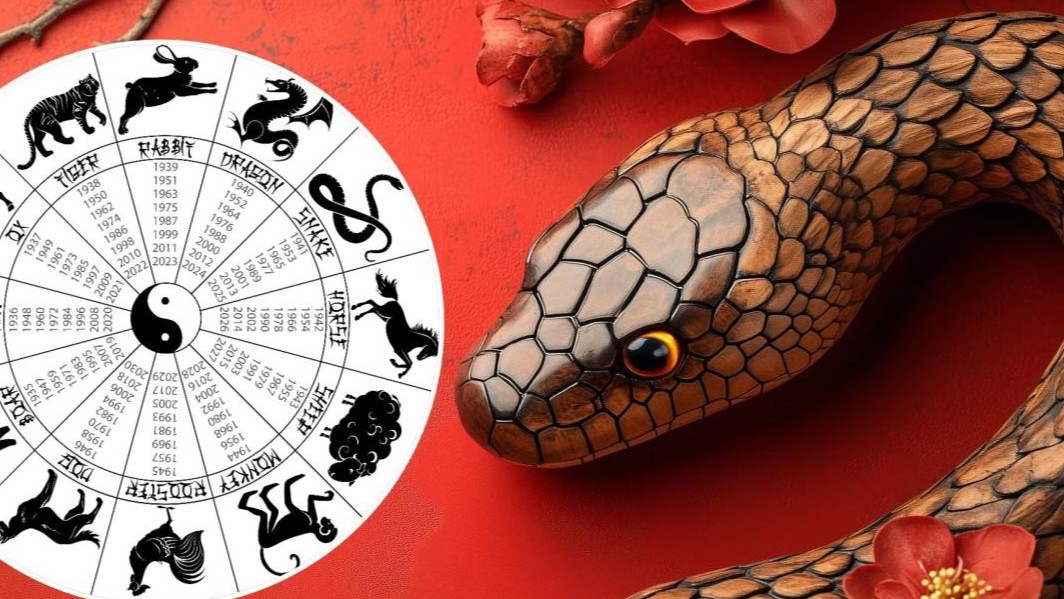
In Chinese astrology, the year 2025 as the Year of the Wood Snake, a creature defined by its ability to outgrow its own skin and therefore is viewed as a period of profound shedding. Numerologists point to it as a “9 Year” which symbolises the end of a cycle symbolizing completion. Whether these predictions are true or not is just a matter of perception.
Personally, this past year has been a massive personal transformation and I find myself trying to make sense of the world around me. However, the biggest learning has been to unlearn. The realisation that the belief systems I had clung to for a decade were no longer serving the person I was becoming.
The most difficult part was outgrowing my mentors. These were individuals whose guidance shaped my career and my worldview, and for whom I hold immense gratitude. However, I realized that I had reached the edge of the container they built for me. To widen my horizon and embrace new opportunities, I had to accept that their role in my story had reached its natural conclusion. It was time to fly away—not out of spite, but out of necessity.
I wonder if letting go is so vital for growth, why does it feel like pulling teeth? Why does the mind cling so desperately to the very things that weigh us down? To understand that, we have to look past the stars and into the “sticky” machinery of the human brain.
The Architecture of rumination: Why the brain won’t shut up
If letting go were a simple conscious choice, we would all be zen masters. Instead, we find ourselves lying awake at 3 AM, replaying a conversation from three years ago or wondering “what if” about a closed chapter. This isn’t a character flaw; it is a cognitive glitch.
Before we even get to the mechanics of memory, we have to deal with the Sunk Cost Fallacy. This is our tendency to continue an endeavour once an investment in time or effort has been made, even if the current costs outweigh the benefits.
We think, “I’ve put ten years into this belief system, I can’t just drop it now.” But the snake doesn’t look at its discarded skin as a waste of energy; it sees it as the price of admission for a larger life. To stay just because you have already stayed is to prioritize your past over your potential.
Adding to this is the End-of-History Illusion. This is a psychological phenomenon where we recognize how much we have changed in the past, but we mistakenly believe our “present self” is the finished product. We think the version of us sitting here today is the final version.
Because we don’t expect to change anymore, we cling to our current beliefs with a white-knuckled grip. When we outgrow a mentor or a career path, it feels like a crisis because we forgot that we are a work in progress. We forget that the “loop of 9” isn’t just about ending the past; it is about making peace with the fact that the “you” of 2026 will look back at the “you” of today as just another skin to be shed.
The Zeigarnik Effect and the “Open Loop”
Once these fallacies take root, the brain’s hardware kicks in via the Zeigarnik Effect. Named after Soviet psychologist Bluma Zeigarnik, this principle states that people remember uncompleted or interrupted tasks much better than completed ones. In her initial studies, Zeigarnik noticed that waiters could remember complex orders perfectly while they were being served, but the moment the bill was paid, the information vanished from their minds.
When we apply this to our personal lives, the implications are heavy. A relationship that ended without a “proper” talk, a career path we abandoned without a sense of mastery, or a mentorship that faded into awkward silence are all open loops. Your brain views these as “incomplete tasks.” Because the loop is open, the brain continues to dedicate background processing power to it, manifesting as rumination. We aren’t just thinking; we are mentally pacing a room, looking for an exit that hasn’t been built yet.
The “Mental Whiteboard” and attentional highjacking
In her book Peak Mind, Dr. Amishi Jha takes this further by exploring the mechanics of attention. She uses the metaphor of a mental whiteboard to describe our working memory—the space where we process information in real-time. This whiteboard has a very limited capacity.
When we ruminate, we aren’t just “thinking about the past.” We are taking a permanent marker and scribbling old grievances, the “could-have-beens,” and outgrown beliefs all over that limited space. This creates two distinct problems:
- Attentional Highjacking: Your “flashlight” of attention is permanently pointed backward. If your flashlight is aimed at the shadows of the past, you cannot see the opportunities standing directly in front of you in the present.
- Cognitive Load: Rumination is an active process. It requires energy. When your mental whiteboard is cluttered with the residue of old mentorships or outdated self-images, you suffer from “brain fog” not because you lack intelligence, but because you lack space.
Strategies for closing the loop
Since we know the brain is obsessed with completion, we can’t just tell ourselves to “stop thinking about it.” We have to trick the brain into believing the task is done.
1. The “Ceremonial” completion
Since the brain is obsessed with the Zeigarnik Effect, give it the “end credits” it craves. If you’ve outgrown a mentor or a friendship, and a face-to-face closure isn’t possible or healthy, write a letter you never send. Express the gratitude. List three specific things they taught you. The ‘Inventory of Gratitude’ helps letting go of mentors or lost love and the pain often comes from a feeling of “betrayal” or loss. Acknowledge the end out loud or on paper—”I have received the value of this connection. The transaction is complete.”
Write it, burn it, destroy it. It sounds cheesy, but it signals to your subconscious that the “task” of that relationship is now Complete.
2. The Five-Minute rule
In Peak Mind,Dr. Jha emphasizes the power of mindful awareness. Instead of fighting rumination and struggling to ‘not think about it’ (which only makes them louder). Give it a dedicated container. Instead of trying to banish ruminating thoughts, give them a scheduled appointment. Tell yourself, “I will obsess over this for exactly five minutes at 4:00 PM.” When the time is up, use a “reset” phrase to signal your brain of a”Mental whiteboard clear”. Decidedly create some movement or a physical task or activity.
3. Update your “Firmware”
Acknowledge that your old belief systems were “Version 1.0.” They weren’t failures; they were necessary for that stage of your life. When you feel the pull of the old skin, remind yourself: I am not deleting my past; I am updating my operating system. #### 4.
Now, bring your attention and focus to what you want to build. Make a list. Forgive yourself and others. Use of your pain and turn it into energy to build something better. Be it personal goal or a fresh start.
Final thoughts
The beauty of the “loop of 9” or the shedding of the snake’s skin is that it makes room for something better. We often fear the void that letting go leaves behind, but that void is actually the “clean whiteboard” Dr. Jha describes. It is the only state in which true innovation and new growth can occur.
As you look toward the horizon, don’t ask what you need to add to your life to make 2026 successful. Ask what you need to drop. The wind is picking up, and you can’t fly if you’re still holding onto the branches of the old tree.
Here’s to traveling light. Hopefully, when we review the year twelve months from now, we won’t just feel “older”—we’ll feel lighter, happier, and finally, completed. Good luck!