
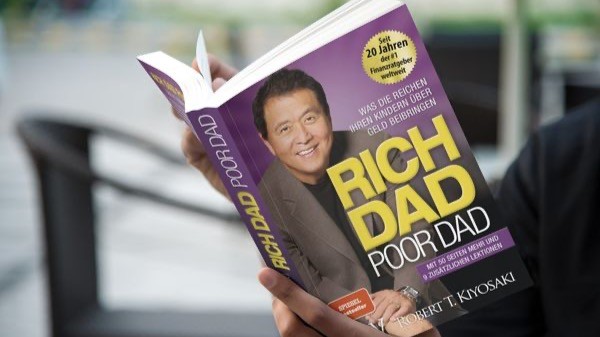
In Rich Dad, Poor Dad, Robert Kiyosaki famously compares money to energy, a force, that can be channeled, grown, and redirected through mindset. It’s a compelling analogy. One that resonates with those trying to make sense of personal finance beyond numbers and into something more intuitive.
But like all metaphors, it has its limits. Equating money with energy is not wrong just incomplete. It is like using a map to understand a city: useful for direction, but it can’t capture the smell of street food or the buzz of a market square.
So what if we dissect Kiyosaki’s idea and take it one step further?
Energy governs more than productivity or wealth. It flows through our emotions, intentions, and interactions. When a stranger smiles and you smile back, there is no monetary exchange but your entire mood can shift. That is energy. Money may enter that equation, but it is never the whole equation.
Energy is ancient. Money is invented.
Energy is ancient. It may or may not be defined by science. It is in the way we enter a room. In the tone behind our words. In the silences we hold and the empathy we extend. Energy predates currency, corporations, and credit scores. It existed before language, before trade, before even the first campfire negotiation over who caught dinner.
In contrast, money is a brilliant recent invention. It is a tool. A system to assign, store, and exchange value. Incredibly useful? Yes. Life-altering? Definitely. But it’s not embedded in our biology. It is not encoded in our DNA.
We weren’t born to chase bank balances. We were born to seek connection, safety, belonging and self-actualisation. Things rooted in emotional and energetic exchanges. Evolution doesn’t select for billionaires. It selected for tribes that took care of one another. For compassion.
Of course, money plays a crucial role in modern life. It pays the rent, buys the groceries, and fuels economies. To pretend it doesn’t matter would be naïve. But to pretend it is the only thing that matters would be equally flawed.
The feeling of being seen. The relief of being heard. The power of being held. None of these can be bought or sold. They are rooted in the invisible currency of human energy in trust, in kindness, in presence.
So yes, money shapes our reality. But energy shapes our humanity.
Kiyosaki’s money mindset: More than just Math
Rich Dad, Poor Dad isn’t your typical personal finance book filled with budgeting tips. Instead, it challenges the way we think about money. His most famous idea? The poor and middle class work for money; the rich make money work for them.
He emphasized financial education, passive income, and shifting from consumer to creator. His tone is often bold and provocative. “The lack of money is the root of all evil,” he writes, flipping the traditional quote.
One of his more philosophical ideas was that money flows where mindset goes. That our relationship with money is shaped by how we think and feel about it. And in many ways, this is true. But here’s the catch: energy may shape money, but not the other way around.
You can reflect Energy in Money, but Money doesn’t reflect Energy.
The comparison between money and energy works best when we think about money as a consequence of energetic flow: mindset, creativity, generosity, discipline. Your beliefs about abundance or scarcity influence your decisions. Your emotional energy affects your career, your relationships, your willingness to take risks.
In that way, yes money can reflect energy. If you’re focused, intentional, and growth-minded, chances are your financial decisions will align with those traits. Energy sets the tone; money follows.
But here’s the catch: the rules of money don’t apply back to energy.
Money operates in measurement: savings, ROI, percentages, trends. Kindness, presence, and emotional energy don’t follow that math. You can invest in people, but not with spreadsheets. You don’t earn joy in percentages.
You can’t balance your emotional wellbeing like a checkbook. You can’t accrue compassion points and withdraw them on demand. There’s no “interest rate” on kindness or gratitude. You can invest in people, sure but not with the same metrics and spreadsheets you would use in a stock portfolio.
Energy resists quantification. It lives in the abstract, in the invisible in the feeling you get when someone listens without judgment or holds space for your grief.
Kiyosaki’s model is useful. It invites us to think about money as something fluid, something we can manage rather than fear. But the metaphor sells short when it tries to suggest equivalence.
The invisible economy of kindness
If energy is cosmic, kindness is one of its purest tangible forms. It is subtle, often unacknowledged, and almost always transformative. Kindness isn’t always loud or flashy. Sometimes, it is just showing up. A thoughtful word. A gesture. A little extra patience on a bad day.
And just like energy, kindness moves. It flows from one person to another, often without recognition or repayment. It is not transactional. It is relational.
But here’s the beautiful paradox: kindness is not repaid. It is paid forward.
It is how families grow, how cultures form, how civilizations survive. Parents work jobs they hate so their kids can chase dreams they never could. Immigrants endure hardship so future generations can belong. Every socio-economic class, in its own way, stretches to offer the next generation something more.
We rarely give back to the same person who helped us, but we often pass that help along. Someone mentored you? Now you mentor someone else. A stranger once made you feel safe? You now instinctively do the same for others.
This forward motion is what makes kindness powerful and different from money. Money is a loop: earned, spent, saved, borrowed, repaid. Kindness is a spiral moving outward, upward and evolving. It doesn’t close the loop. It opens the door.
And when kindness becomes culture when generations pass it down not as charity but as character societies progress. Not because everyone got rich, but because someone chose to be kind when they didn’t have to.
Kindness isn’t weakness. It is continuity. The quiet, unpaid investment that keeps humanity afloat.
The limits of the ledger
Kiyosaki promoted tracking money. Budgets. Statements. Financial intelligence. Learning to read numbers, understand cash flow, distinguish between assets and liabilities. Knowing what goes in, what goes out, and how to make the difference grow. All valid advice, money thrives in measurement. It is predictable, quantifiable, and accountable. The entire economy is built on our ability to calculate it.
However, what do you build an abundance mindset?
To build an abundance mindset, you cannot compute generosity. The whole point of having an abundance mindset rests on believing in ‘money as a tool, not the end goal.’
Energy or kindness doesn’t submit to spreadsheets. You can’t chart the return on a compliment. There is no dashboard for empathy. The moment we tie kindness to return, it stops being kindness. It becomes performance.
True kindness offers without asking. Helps without expecting. Listens without keeping score. It is not an investment strategy. It is not a brand-building exercise or a moral barter system.
It is an offering. Small, quite gift without any certainty of outcome.
Energy may fuel results, but it doesn’t promise them. And kindness, in its purest form, doesn’t come with receipts. It asks nothing, yet often gives everything not because it is logical, but because it is human.
In a world obsessed with measurable success, that might feel the most radical thing of all.
The symbol isn’t the satisfaction
At its core, money is symbolic. A representation of value. It stands in for things we want: food, shelter, security, comfort, convenience, access. But no matter how much of it you gather, money remains a middleman. A means. Not an end.
You can buy a house, but not a home. You can buy food, but not health.
Worse still, money lacks a natural stopping point. You reach a financial milestone, only to set a bigger one. Today’s dream income becomes tomorrow’s baseline stress. The goalpost always moves. So we keep earning, upgrading and optimizing. Hoping the next milestone will finally deliver the satisfaction we imagined.
What remains constant is this: what truly fulfils us is rarely purchased. It is in connection, purpose, and being present. These are currencies money can reference but never purchase.
Because the symbol, no matter how shiny, is never the substance.

Conclusion: Know the difference
Money is money. Practical. Countable. Tangible. You earn it, spend it, loan it, repay it. You calculate it, track it, and grow it through knowledge and strategy. It’s a tool. A necessity. A system built by humans, for humans.
But energy is something else entirely. It is not a transaction. It is a transmission. It flows through your body, your presence, your choices, and your care. It exists in laughter and grief, in silence and connection. You can’t swipe it, budget it, or accumulate it in vaults. You feel it. You protect it. You become it.
We need to stop conflating the two.
Kiyosaki is right to encourage people to build wealth and think beyond a paycheck. Financial literacy matters. But in a hyper-optimized world, where everything has been turned into data, hustle, and returns. We have lost sight of something softer, deeper, and far more vital.
Compassion. Purpose. Kindness.
The world needs wealth, yes. But it also needs warmth. It needs people who choose decency over dominance. Who pay attention, not just dues. Who give without asking, and connect without calculating.
So build your portfolio. But also build your presence. Build assets. But also build character. Track your net worth, but also guard your energetic worth. Because no matter how much money we generate, it is the energy we radiate that will define us.
At this point in history, maybe what we need more than millionaire presidents is people who are rich in spirit.