

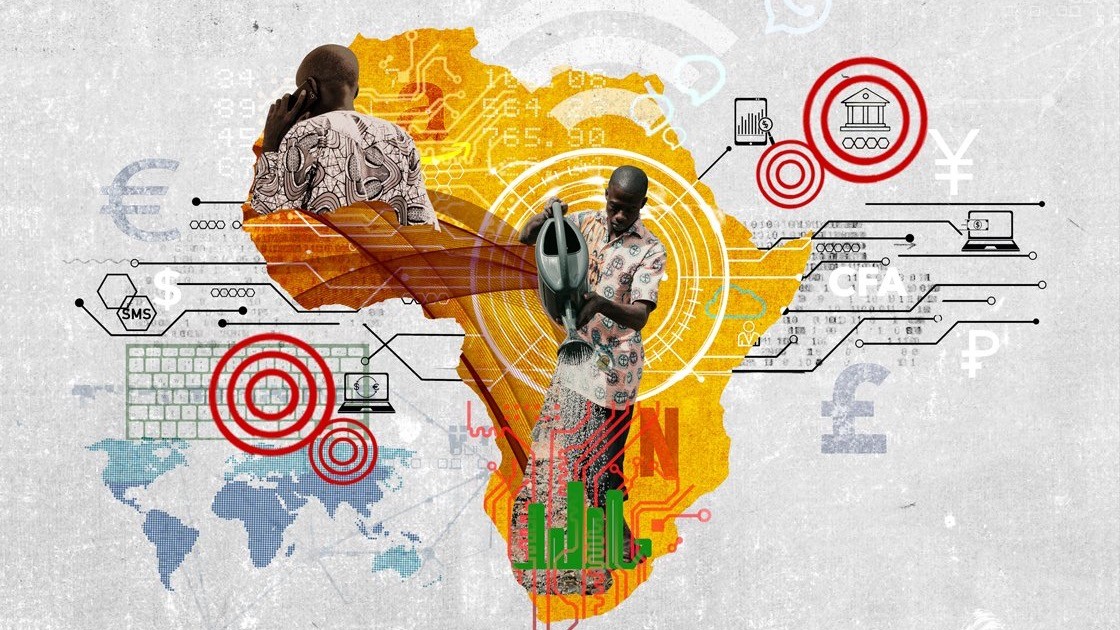
Last week, I attended a tech conference buzzing with familiar energy: crisp suits, caffeinated ideas, and the air thick with possibility. One panel, in particular, stood out. It was on investments in startups, featuring a seasoned investor whose portfolio included early bets on now-iconic companies (like Talabat and Grab) that went on to redefine digital convenience across the Middle East and Asia-Pacific.
Halfway through the discussion, an audience member asked a question that sliced through the polite optimism in the room:
“Why do investors not invest in homegrown startups in Africa; The ones solving genuine local problems and connecting previously untapped populations to the digital world?”
The panelist paused briefly before offering an unvarnished truth: “Investors prioritize ROI and sure-shot returns over bringing change into society. We look for exit strategies like mergers, or IPOs. That is the game.”
It was an honest answer. And an uncomfortable one.
Because in that single moment, the duality of success in the startup world came sharply into focus. On one side, there is the idealistic vision entrepreneurs solving real problems, improving lives, and driving progress. On the other, there is the cold arithmetic of return on investment, where certainty trumps creativity and impact often plays second fiddle to profitability.
This systemic focus on financial certainty creates a profound, and often hypocritical bias in global venture capital world. It reshapes how value is defined systematically sidelining high-impact, foundational solutions that could drive real progress.
The myth of the “Problem-Solving” startup
We are repeatedly told that the most successful startups are those that solve problems. It is the first line of every pitch deck and the gospel of every entrepreneurial handbook. “Identify a pain point. Solve it. Scale it.”
But in practice, “problem-solving” has become more of a marketing narrative than a guiding principle. The startups that get funded are not always the ones addressing the most pressing human needs. They are the ones that can promise investors a faster route to monetization or an easier exit strategy.
Take a look at where the venture capital money flows: food delivery, ride-hailing, e-commerce, logistics, and fintech. These sectors have proven business models and quantifiable returns. But what about startups tackling low-margin, high-impact issues like access to clean water, digital literacy, or rural healthcare? These ideas, though transformative, are often sidelined as too risky, too slow, or too local.
The result? A skewed innovation ecosystem where what gets built is not what is most needed but what is most profitable.

PC: marketoonist.com
For founders, it often means walking a tightrope. Designing products that genuinely solve problems while framing them in language that seduces investors. A startup might start out to empower farmers, but by the third funding round, if they get one. It is repositioned as an “agri-fintech” company. The core mission stays, but the story is reshaped to fit marketable metrics.
This is the startup paradox: to survive, many founders must sell not their solution, but the certainty of its profitability. The system rewards performance, not perseverance.
We have created an echo chamber where success is defined not by how deeply a startup changes lives, but by how quickly it can change valuations. The myth of problem-solving lives on but its soul, perhaps, has been outsourced to marketing.
At a deeper level, this duality raises a philosophical question: can an idea remain pure once it has to be sold?
The Investor’s Lens: ROI vs Risk
To understand this bias, one must step into the investor’s shoes. Venture capitalists aren’t in the business of nurturing slow-burning revolutions. They are in the business of returns.
The modern venture capital model, particularly in the US and Europe, is governed by a singular metric: the Internal Rate of Return (IRR) required to satisfy Limited Partners (LPs), such as pension funds and university endowments. This pressure creates an Exit Strategy Obsession among General Partners (GPs), pushing them toward predictable, short-term outcomes.
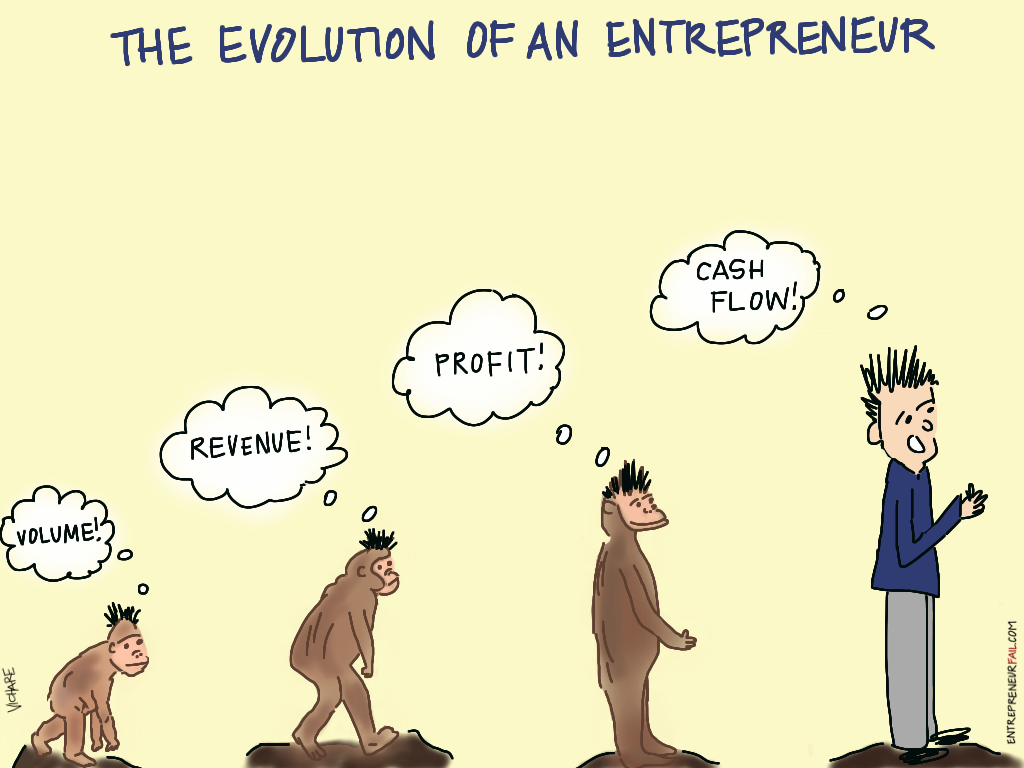
A typical investor is chasing a 10x outcome within 3–5 years. The metrics are clear: predictable markets, scalable models, and a visible exit path. Ideally through acquisition or IPO. This leads to an over-investment (often bordering on hedonism) in derivative ideas.
Therefore, investors consciously or subconsciously, default to models that resemble past successes. Be it “The Netflix of X” or “The Uber of Y.” It is imitation wrapped in data.
Meanwhile, startups that tackle complex, foundational, or infrastructural problems like developing decentralized clean energy grids or building last-mile medical logistics in underserved areas require what is known as “Patient Capital.” They demand longer hold periods (12-15 years) and different metrics focused on sustainability over hyper-growth. Traditional funds, bound by short cycles, simply can’t accommodate that horizon.
Every decision is filtered through risk assessment. The smaller or more fragmented the market, the higher the risk and the quicker the money moves elsewhere. This creates an illusion of rationality.
PC: therodinhood.com
Investors gravitate toward markets they understand and regions where other investors are already active which explains why the Middle East, APAC, and Silicon Valley attract repeated rounds of funding, while much of Africa and South Asia remain under-capitalised.
The obsession with certainty, ironically, kills the very spirit of innovation that the startup world claims to champion. After all, how innovative can an ecosystem be if everyone is betting on the same formula?
The cost of ignoring the grassroots
When the search for predictable exits determines capital allocation, humanity suffers.
Consider the African tech scene, where brilliant local founders are creating digital bridges for communities historically left out of the online world. From mobile banking for the unbanked to agri-tech solutions connecting farmers directly with markets, these startups are addressing fundamental needs. But most of them operate on thin budgets, relying on grants or local micro-investments rather than serious venture backing.
The irony is painful: the next billion internet users are expected to come from emerging markets. By ignoring these grassroots innovations, investors aren’t just missing out on potential. They are reinforcing global inequality in the digital age. The world doesn’t need more food delivery apps. It needs more ways for people to access the digital economy itself.

PC: Charity for water
True long-term financial success often lies not in chasing the easiest return, but in building the foundational infrastructure of tomorrow’s global economy. The next generation of trillion-dollar businesses may not look like the last. They will be the ones solving problems no one else dared to fund.
The hypocrisy of “Impact” and “Innovation”
The tension between financial certainty and real-world impact has led to the problem of “Impact Washing”. Many startups and funds use flowery language about “social impact” to attract mission-aligned talent and positive media attention, yet their core business model remains exclusively profit-driven. Thus impact becomes a secondary, often accidental, consequence.
This is the Hedonism of Easy Returns. Contrast the vast, immediate societal change offered by a logistics startup connecting remote African farmers to digital commerce with the low-friction profits of a quick-commerce app in a well-served metropolis. The latter, a mere convenience, often wins the funding race due to lower risk and faster exit potential, even though the former solves a much greater, existential human need.
The lack of concrete Impact metric for societal change (e.g., reductions in carbon emissions, increase in financial inclusion), is often used as as factor to fall back to monetary measures and valuations.
The core issue is a Misalignment of Incentives. The founders incentivized to serve the market (solving a problem), but the VC is incentivized to serve the LP (securing a fast exit). When these two incentives conflict, the LP’s goal: liquidity, always wins.
Rethinking the Ecosystem
Of course, investors aren’t villains in this narrative. They operate within an incentive system designed to reward short-term success. But if we truly believe that innovation should drive progress not just profit, then the system itself needs rethinking. Here are a few ways forward:
- Establish Financial-Grade Impact Metrics: Drive global consensus on standardized, verifiable, and comparable impact metrics (e.g., GIIN’s IRIS+ or SDG alignment) to move impact data from qualitative reporting to quantitative, audit-ready numbers, making it easier to integrate.
- Incentivize Impact-Driven Investment. Governments and global financial institutions can promote blended finance combining public funds with private capital to de-risk social innovation. Impact funds can measure success not just in returns, but in inclusion, sustainability, and reach.
- Shift the Startup Narrative. Media and educational institutions should spotlight success stories beyond unicorns startups that achieved lasting social change or long-term resilience. We need more stories about durable progress, not just dazzling valuations.
- Introduce Permanent Capital Vehicles (PCVs) Funds designed with longer horizons (often 15 years or open-ended), PCVs align funding structures with complex, high-impact problems, prioritizing sustainable growth over forced exits to match the capital structure with the complexity of problems being solved.
- Shift to Impact Carried Interest Tie a portion of fund managers’ bonuses not just to the pure Internal Rate of Return (IRR) but also to verified social and environmental outcomes achieved by the portfolio companies; forcing focus on quality over quantity.
- Policy Support. Governments can offer tax incentives for investments in underserved markets, making it viable for investors to take calculated risks with social upside.
The call to question
That panel discussion at the tech conference ended as most panels do with polite applause and business cards exchange. The next session on “AI for Growth.” But that single question from the audience lingered.
It revealed not just a gap in funding, but a gap in philosophy. We often talk about innovation as if it is a universal good but who it benefits depends entirely on where the money flows.
Perhaps it is time we stop celebrating startups merely for being profitable and start asking profitable for whom?