
Introduction
In a world driven by data and tangible assets, the concept of beauty often seems abstract. However, humans are hopelessly obsessed with beauty. We will cry in front of a painting. We will spend hours tuning our selfies to match an aesthetic. The question is: why? Why does our species care so deeply about something that seems so…optional?
Unlike eating, sleeping, or escaping tigers, beauty isn’t essential for survival. Yes, beauty could be ‘good-to-have’ genes in your offspring. A reminisce of the evolutionary trait that helps protect and proliferate your own species. But other than that no real additional advantage.
Yet, our lives are riddled with beauty. Not just in looks, jewellery or accessories. In music, art, movies and poetry. It is estimated that there are approximately 170 million unique books in the world. Today, the global entertainment and media industry alone is ~ USD 3 trillion. Artist like Taylor Swift or bands like BTS can earn tens of millions of dollars from a single album. A single painting at Sotheby’s can sell for millions. So why do we pay?
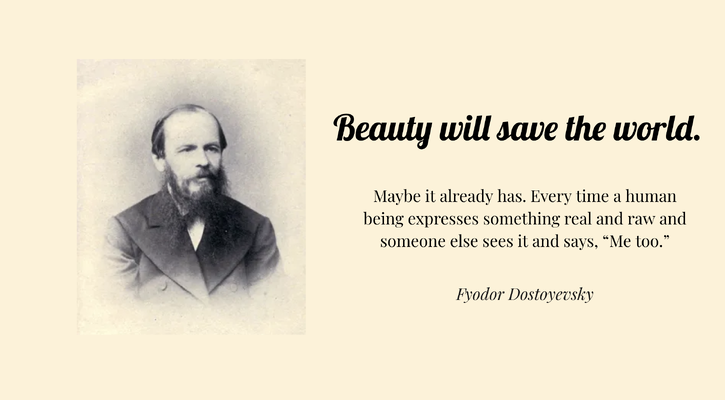
It is how we bond. How we signal. How we feel. A flower, a violin solo, a poem about death. All of it hits us where it counts: the pleasure center.
This immense valuation of art and entertainment isn’t just a modern phenomenon. It’s the latest chapter in a story as old as humanity itself: our deep, intrinsic, and unwavering connection to beauty.
So lean in. Explore why beauty isn’t just skin deep, it is species deep.
1. The Biology of Beauty: Wiring That Goes Beyond Survival
A 2011 study even showed infants as young as two months prefer looking at attractive faces. Given the choice between symmetrical features and asymmetrical ones, the baby looks longer at the symmetrical face. No cultural bias. No fashion magazine influence. Just a primal, biological preference encoded somewhere deep in our neural blueprint.
Before beauty became a social construct, it was also a neurological one. The human brain has specialized hardware for detecting and processing aesthetic stimuli. The fusiform face area lights up when we see faces. The visual cortex hums when we see balance and contrast. And when something is beautiful to us. Be it a melody, a sunset, or Margot Robbie. We get a dopamine hit. The orbitofrontal cortex, associated with pleasure, decision-making, and reward, lights up into action.
And that’s the kicker: we don’t just notice beauty. We feel it. That sensation of being moved by a movie scene or a song? That’s your biology reacting to the abstract. It is evolution’s way of teaching us to value patterns, harmony, and emotional resonance.
Other species recognize beauty too, but theirs is strictly functional. A mating call. A mating dance. A mating feather. That’s about it. Humans, however, have taken it further. We write sonnets about loss, choreograph dances about joy, and stare at fractals in mathematical awe. We are probably the only species that creates and consumes beauty not just for function, but for meaning. Like restoring a vintage car not to drive fast, but to feel something real.
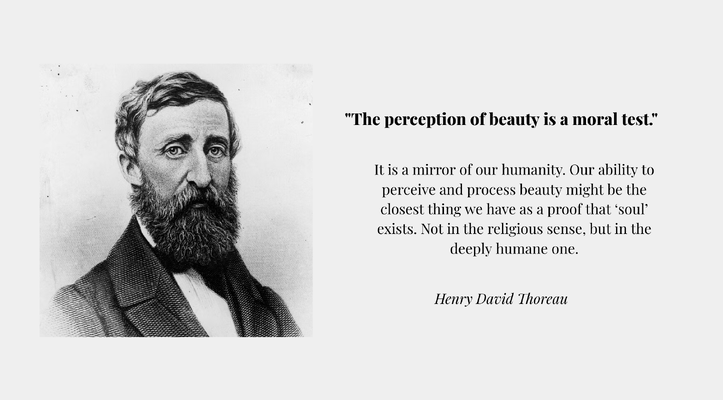
So yes, we are wired for survival. But we are also wired for appreciating sunsets, for humming minor chords, for gawking at well-placed brush strokes. In the blueprint of being human, beauty is an upgrade granted to our species.
2. What is Beauty, Anyway?
In theory, beauty is an industry with approximately USD 646 billion in revenue made primarily by making women feel inadequate. Yes, men’s care product do exists; but the primary idea is still to improve individual perception of the self. Skin, hair, nail, face, feet. Somehow all of these need improvement all the time.
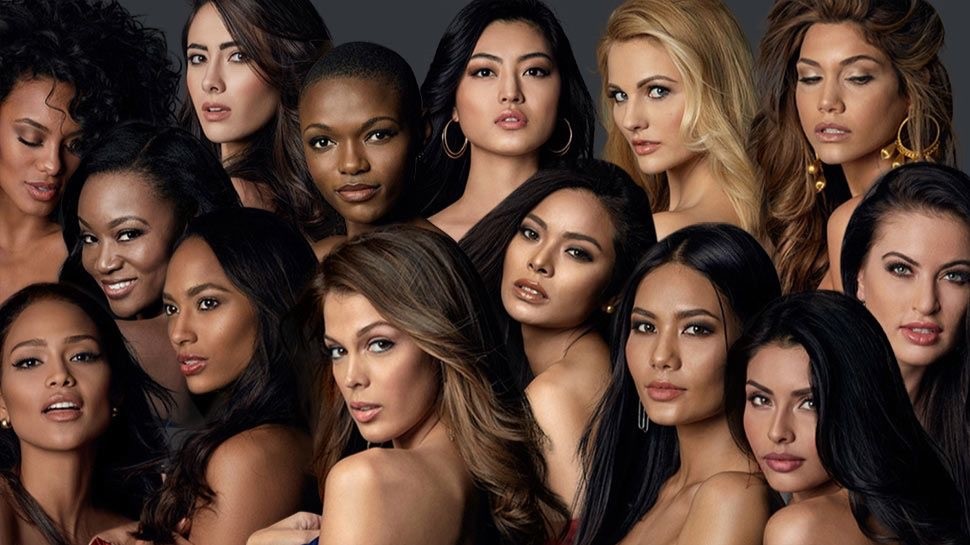
And then there are beauty pageants. Those glittering showcases of grace, gowns, and impossibly symmetrical faces. While they may celebrate poise and performance, they also quietly cement a rigid blueprint of what “beautiful” looks like. Tall, slim, smiling just right. Year after year, contestants parade a curated ideal, turning beauty into a competitive sport scored by cheekbones and charm.
But beyond the vanity metrics, beauty bleeds into everything. It can exist in various forms. For some, it’s the soft lighting in a Vermeer painting. For others, it’s Beyoncé at the Renaissance tour. Some find it in a snowfall. Others in silence. It exists in our buildings and statues. It flows in rivulets, or spreads like home-made butter.
In truth, beauty transcends. It’s visual, auditory, olfactory, linguistic, artisanal, kinetic, effervescent. It dances between the lines of aesthetics and the emotion it emits.
There is sonic beauty in music, structural beauty in architecture, and poetic beauty in words. Emotional beauty in a three-minute song that says what you couldn’t in a year. There’s intellectual elegance in a perfectly written algorithm. Cultural references in standup comedy. Defiance in Graffiti. Creativity in beatboxing. Expression in memes and tattoos, and sneakers. Everything is art.
Beauty’s playground is vast.
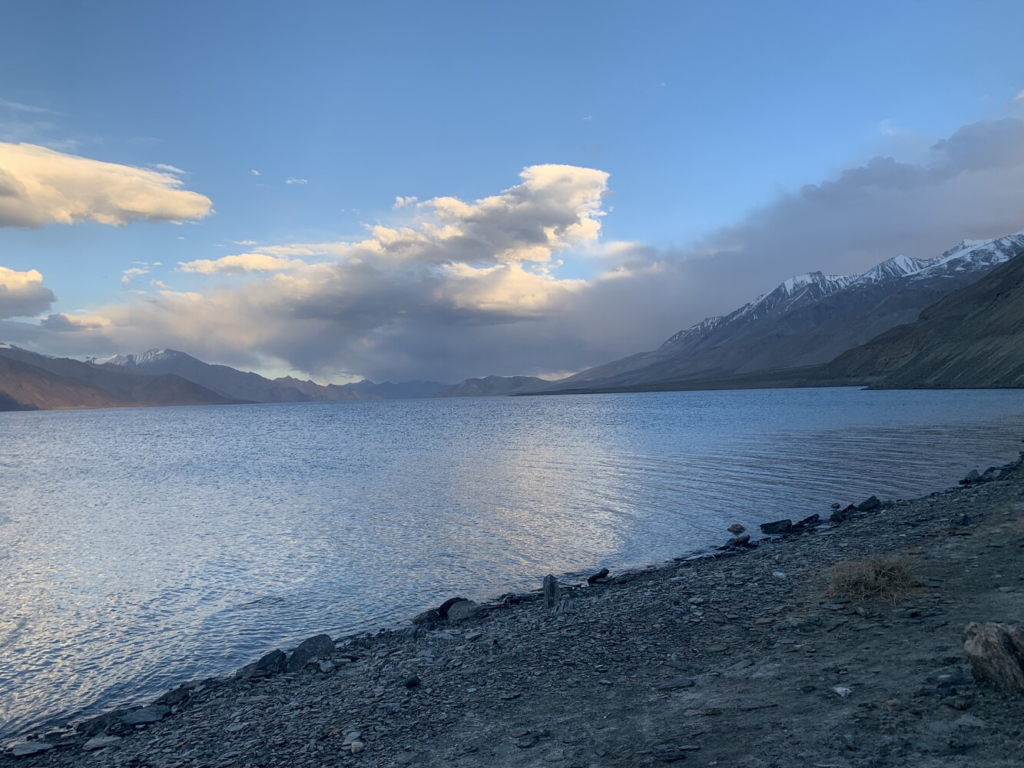
PC: Original | My version of beauty| Pangong Tso, Kashmir, India
3. If beauty is abstract, what remains constant underneath?
A vague answer rests in the 300BC writings of mātrāmeru, by Acharya Pingala, an ancient Indian poet and mathematician. This later became known as the Fibonacci sequence. The irrationality of the ‘Phi’ resonates with the inexplicability of beauty. And yet scientists use the golden ratio (1.618) to explain beauty with logic.
Plato saw it as the bridge to the divine; something transcendent. Kant argued that beauty is disinterested pleasure: it delights without demanding utility. And Oscar Wilde put it as, “Beauty is the only thing that time cannot harm.”
What these stalwarts in their era’s and descriptions are stating is that beauty always makes us feel.
Maybe that’s the true constant: beauty is a signal. A quiet hum beneath the noise of survival and output. It asks us to pause. It makes us pay attention. It persists because it touches something time can’t dull: our capacity to wonder.
This emotional blueprint is why some films never fade. Think of a film like Casablanca or The Shawshank Redemption. Decades later, we still return to them. Not for the plot twists, but for the emotional architecture they built within us. They became classics because they tapped into something that elicits the same emotion in people across cultures and generations.
And every so often, a new film joins their ranks. Not by mimicking the past, but by echoing the same emotional truth. That is beauty in action.
Whether it’s awe, joy, nostalgia, or longing; it cuts through logic and lands straight in the gut. It reminds us we are alive.
4. Beauty Through Trends, Taboos, and Timelines
Physical beauty is just the most obvious form of it. And our eyes, naturally, are its gatekeepers. Maybe that is why we say “beauty lies in the eyes of the beholder.” Ask a hundred people to define it, and you’ll get a hundred different answers. Each tinged with memory, emotion, and cultural seasoning.
Fact: According to anthropologist Nancy Etcoff, standards of beauty have existed in every known human society. The rules change, but the presence of beauty never disappears.
Beauty, like language or fashion, changes with time and place. What once made hearts flutter might now earn a raised eyebrow or a meme. Each generation inherits an aesthetic legacy and promptly rebels against it. It is like giving tradition a makeover.
In ancient Greece, beauty meant symmetry, golden ratios, and marble abs. In the Renaissance period beauty and art focused on representing the human form. In the Tang dynasty, beauty meant softness and plumpness.
Geography throws its own filters into the mix. In Korea, porcelain skin and delicate features are prized. In parts of Africa, body scarification is a sign of beauty and identity. In Polynesia, tattoos are aesthetic heritage. What’s beautiful in Tokyo might be baffling in Texas. And that’s the point.
Beauty is elusive by design; both deeply personal and wildly contextual. It is moulded by media, power, values, and even insecurities. But the constant thread? Every culture finds a way to express it. And in doing so, it shapes not just how we look, but how we see.
5. AI and Art: Who’s Feeling the Feels?
Let’s address the pixelated elephant in the room: Yes, AI can create art. It can compose symphonies, paint hyper-realistic portraits, write poetry that rhymes and makes sense. It can even mimic your favourite novelist’s existential crisis, with better grammar. So if creativity is just pattern recognition at scale, does that mean machines are now artists?
Well, not quite.
Because while AI can generate beauty, it can’t feel it. It doesn’t get goosebumps from a plot twist. It doesn’t cry at a love song or stare too long at a painting. It doesn’t associate a movie to his/her own struggle. It doesn’t get reminded of someone it never told “I love you” to. It doesn’t even have someone. That’s the human job.
Art isn’t just about the act of creating. It is about the act of connecting. A poem, a song, a perfectly framed shot in a film. All of it is a digital smoke signal saying, “Hey, do you feel this too?” What was once reserved for the elite now belongs to everyone. All you need is a smartphone and an opinion. In a world drowning in information and overstimulated by scrolls. Real connection is the rarest currency. And despite AI’s creative horsepower, it cannot cash in.
Sure, AI can help us outsource creativity. But what we really crave is resonance. Meaning. That moment when a stranger’s lyrics echo your thoughts. That blink of belonging. And no algorithm can automate that.
Because while machines can manufacture beauty, only humans give it soul. Beauty isn’t just in the brushstroke. It is in who holds the brush and who holds their breath at the viewing.
Why Beauty (Still) Matters
In the end, art isn’t just decoration. It is declaration. A visual “I exist,” shouted into the void. It is how we archive emotion, rebel against routine, and make the mundane feel sacred. Whether it is a centuries-old fresco or a TikTok dance. Art lets us speak in frequencies beyond physics.
True, resonant, irrational beauty is how we remember we are more than meat and meetings. It reminds us that life isn’t just about surviving the inbox but about feeling something real between coffee and chaos. And maybe that’s the point, we are not just surviving, we are hopelessly expressing. Again and again, until something beautiful finally feels like home.
Maybe our idea of beauty will evolve with AI. Maybe we will device ways to cut through the noise. Probably something we don’t have a word for yet. That’s the beauty of beauty. It never stands still.