
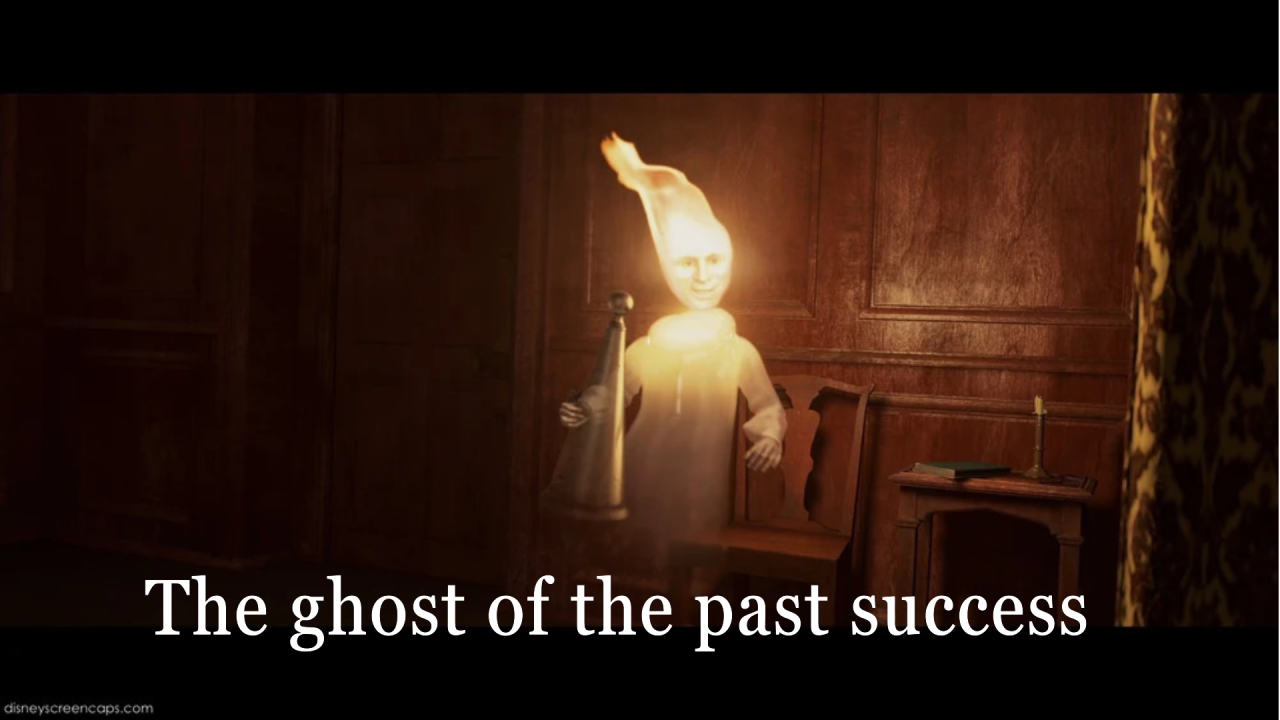
In the novella Christmas Carol, Charles Dickens created the Ghost of the Christmas past to help us visualise what was, what has been, what had been and what could have been all at once. This brings out the memories that illicit either nostalgia or regret. Both equally powerful emotions.
In reality, nostalgia and regret are two sides of the same coin. Be it fond memories of friendships in your ‘college days’ or the pangs of lost love, the one that got away. Moments we cannot relive but cannot seem to let go. Our personal experiences tethered and intertwined with people who were once dear, or maybe still are. These memories frequently revolve around love and connection that have shaped our lives. Fundamentally, both regret and nostalgia reside in the past. A world we no longer inhabit.
The only difference between nostalgia and regret is knowledge and learning. Nostalgia represents a warm feeling of learning coupled with love. It’s a comfortable realization of lessons learned, experiences cherished, and connections deeply felt. It’s the acceptance of the past as a formative part of who we are. The past can be a learning that can be cherished.
Regret, on the other hand, is the stark awareness of knowledge gained too late. It’s the agonizing realization of what we now know, a knowledge that was learnt too late. It is a reminder of the power of choice and the weight of consequences. An uncomfortable feeling that others and/or external factors are not the only blame. It’s a retrospective emotion, a post-mortem analysis of choices made and paths not taken.
Both emotions coexist, offering insights from different angles. The most important learning is that the past cannot be changed. And our future is not dependent on the past. Let’s visualise time on a liner representation.
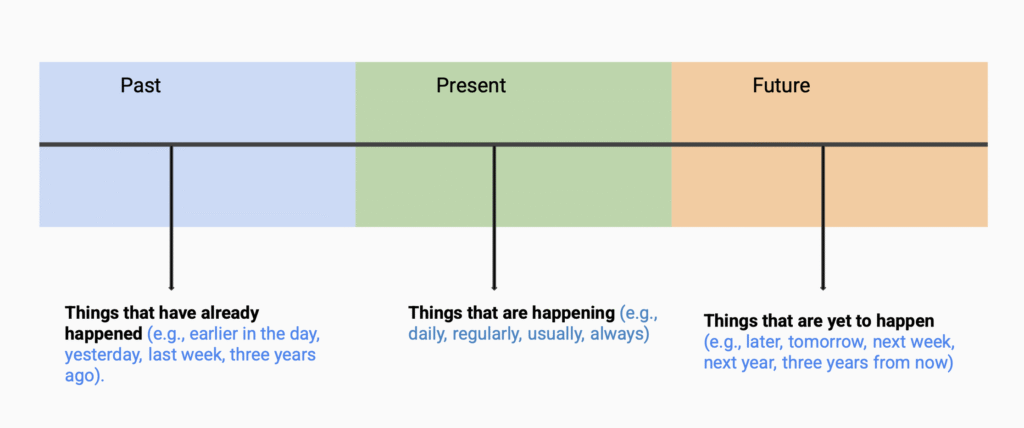
How easy it is to then imagine that this liner uni-directional movement is simple and straightforward. It is everything but that.
In society we are taught, go to school, get good grades, get into college, get good grades, secure a job, get good salary and then you live a life of enjoyment. You reap the rewards of all your struggles. Plan for retirement and your future will be secured. Your children’s future will be secured.
Time as a liner representation is easily understood as something that passes and can’t be gathered back. Now let’s add another correlation of effort and result. The general assumption is the greater the effort, the better the result. And vice versa.
However, the relationship between effort and result when juxtaposed to the above liner graph is a bit more complicated.
The relationship between the past, the present and the future when correlated to effort and results is non-liner. Unlike the dominant societal beliefs. It exists only between past and present. And present and future.
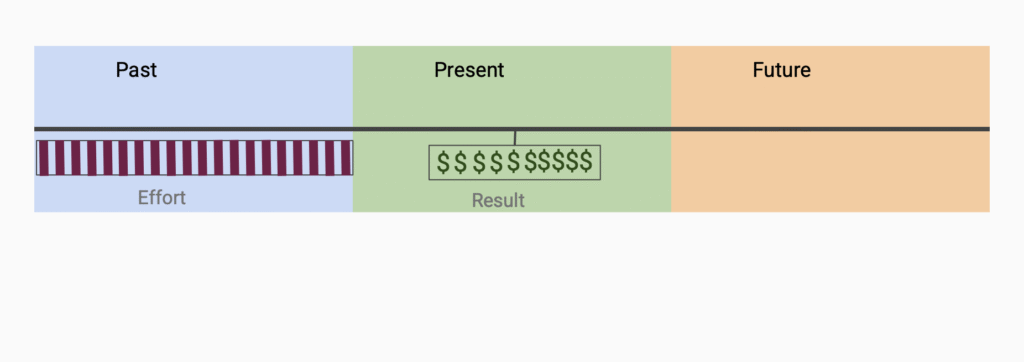
Only present efforts will lead to future results. Take for example a young marketing executive, Shane. Shane puts $200 every month in his 401K investment portfolio. His career begins in 2015 and in 10 years with 10% returns, it is now ~$50K in 2025.
Now to reach a financial goal of 400K, Shane will need to either increase contribution in 2025 or wait more time to reach his goal. His past efforts of $200 a month have already given him the result in the present.
However, if Shane stops making payments today, his future results will be in jeopardy. If he increases contribution in the present, his future results may very well increase. This concept is easy to understand with numbers. Now extrapolate it to other areas such as creativity, expertise and knowhow.
Effort and result may be a simple direct correlation. However, when added to time factor it creates a different equation. Past efforts do not translate into future results. Only present results.
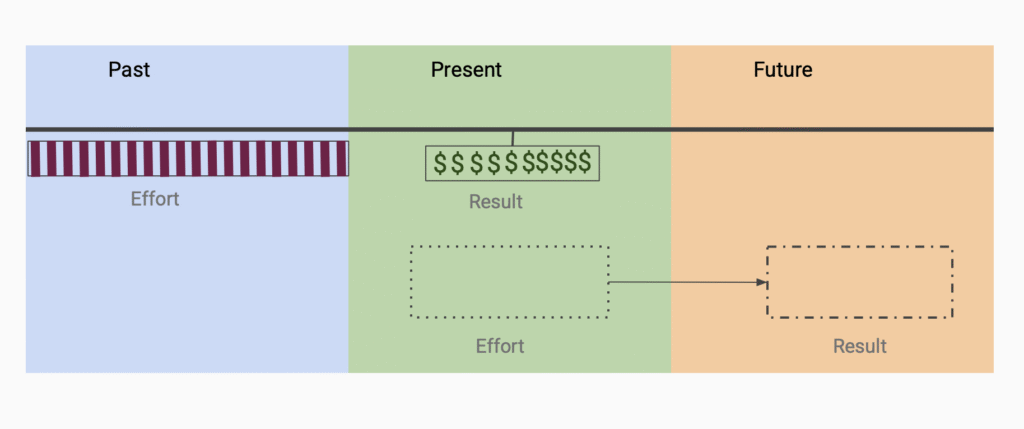
Your past was once a present state, and your future will become a present state. Wisdom lies in understanding that time, as a concept, is somewhat redundant in life; it’s ever-present, a constant flow.
Yet, this understanding often dawns upon us only later in life when you have lived most of it. What you do in the present is what all that matters.
Surprisingly this epiphany is lost to most senior leaders who are too proud of their valiant efforts of the past. Of obstacles they overcome. Of difficulties they faced. Of past efforts that will not lead to future success.
The curse of the past success is one of the biggest reasons why change management is difficult in organisations. Senior leaders are often surrounded by mid-level executive who are unwilling to change the current processes as they have worked wonderfully so far. They forget to see any foresight into the future.
It is also why change management is the most relevant in 2025. Artificial Intelligence (AI) is not just changing software industry but going to impact all industries across the board. All business processes that can optimised to reduce time or cost or both.
As the title of Marshall Goldsmith’s book goes, “What got you here won’t get you there.” The people who got you here, won’t take you there.
This doesn’t mean you are disrespectful of their contribution, it simply means that these people must upskill. They must not be who they were 10 years ago. They must evolve. Their belief systems shattered. Their priorities changed. Their horizons widened.
Take for example when one is 20+ years old still in college, you have your new found freedom. You learn to drink, anything, everything, anytime and every time. Alcohol defines almost all the fun. By the time you are 35, you un-learn the importance of alcohol to have fun. You become more aware of choice and prioritise your health over a drink. By the time you are 45, you re-learn the definition of fun in other activities or hobbies.
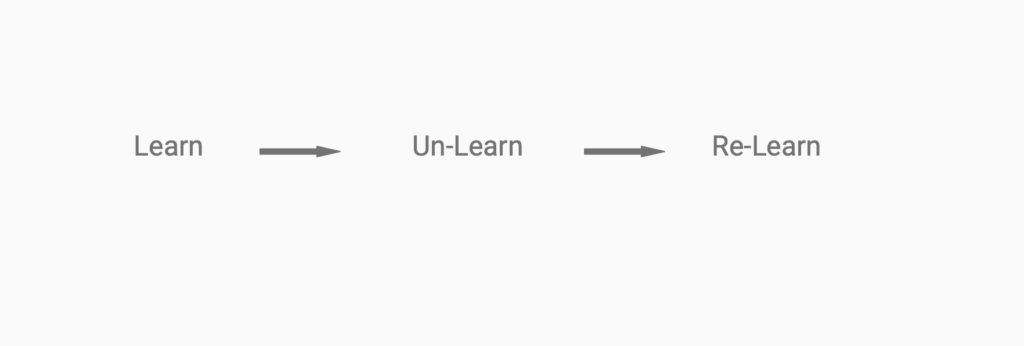
Similarly as an employee transitions from entry level position to a senior position, they must un-learn and re-learn. Priorities. Parameters. Possibilities.
Today, the rate of change is unprecedented which means the playing field is more ‘level’ than ever before. AI is just as new for those out of college versus those at VP level positions. Before this there was social media. Before that there was internet. Adaptation in the new wisdom. Therefore, decision-making is not entirely on past success and trusted process but future possibility: Foresight.
The future will always be uncertain. All you can build is the present.