


This past weekend, my friend invited me to join a wellness cohort she was hosting focused on the principles of Ayurveda. Most people assume that Ayurveda is a complex list of exotic herbs and strict dieting rules. Instead what I have discovered in my journey was something far more profound: Ayurveda is essentially a science of unlearning. It challenges the oh-so-popular ingrained, modern habits that actually undermine our well-being. It asks us to stop chasing the next quick fix and start listening to the body we already have. This journey of self-discovery, fueled by ancient knowledge, led to six transformative lessons that shifted my entire perspective on health, moving the focus from external fixes to internal harmony.
Before we can effectively add good habits, Ayurveda teaches us we must first clear out the blockages both mental and physical that prevent us from absorbing life’s goodness.
#1: Unlearn the myth of absolute nutrition
We are constantly marketed the next great superfood: makhana (fox nuts), nuts, nariyal pani (coconut water), and various probiotics and even millets. While these foods are inherently nutritious, Ayurveda issues a critical caution: the quality of your digestion dictates the value of your nutrition absorbed.
Your digestive fire, or Agni, is everything. If your body is unable to process and metabolize these superfood nutrients effectively, they will not be absorbed; they will be thrown out along with waste, potentially even creating Ama (toxins) in the process.
Imagine your body as a cup. If the cup is already full, pouring in extra water (nutrition) simply causes spillage. The solution is not to drink more, or eat better but to ensure the cup is empty and clean. Ensure your digestive capacity (Agni) is strong enough to handle what you consume. This unlearning redirects your focus from the external quality of the food to increasing the internal capacity of your body to absorb.
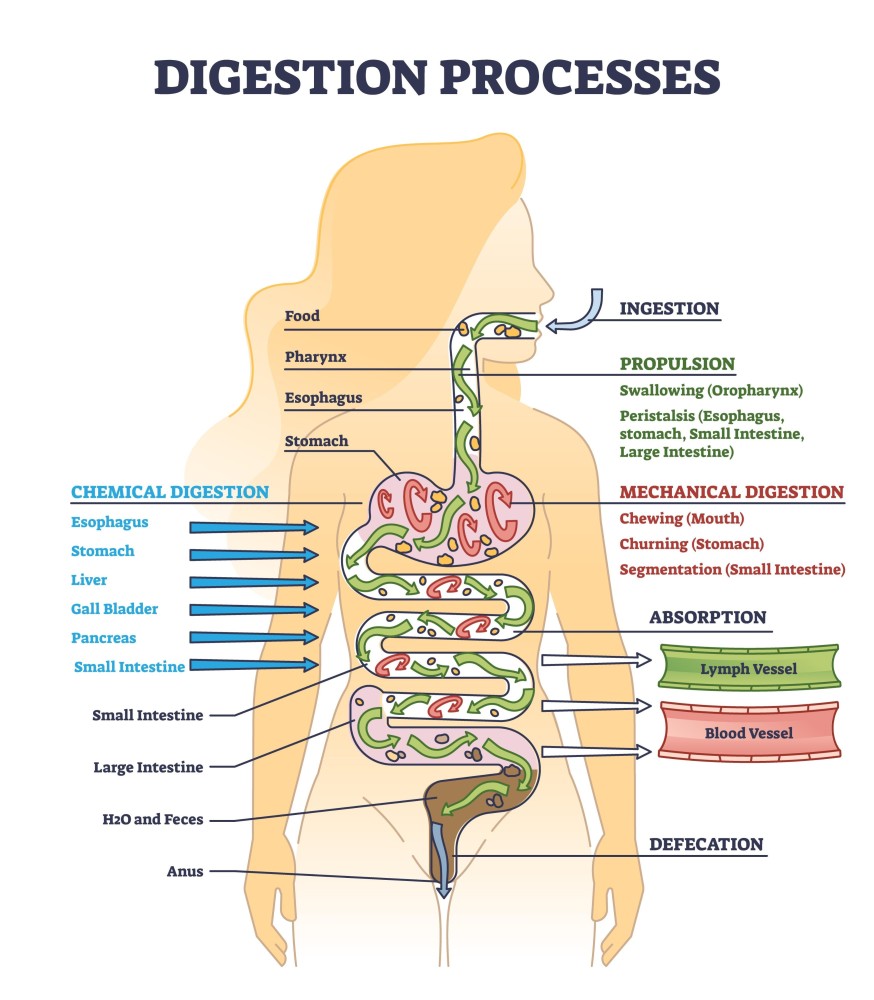
The western explanation of Digestion Process
#2: Removing toxins is equally important
In fitness, we understand that weight loss is a balance between diet and exercise; you cannot eat cake daily and expect to see results. Ayurveda applies this same logic to overall health: just adding medicine is not enough; you must also consciously remove toxicity.
Consider the endless loop of constantly scrolling the internet, causing eye strain, and then taking eye supplements. That supplement is merely treating a symptom while the root cause— the excess screen time remains unchanged.
Toxicity in Ayurveda is multi-layered and must be addressed holistically:
- Physical Toxicity: Foods that are not helpful (processed, stale, incompatible).
- Behavioural Toxicity: Habits that don’t support well-being (e.g., excessive screen time, irregular routines, addiction).
- Environmental Toxicity: A lack of love and support around you fuelled by competition and jealousy.
The concepts of self-care remind us that while boundaries may be needed, blaming others for bad behavior doesn’t solve your issues. The expected behaviour is internal responsibility: change your habits and/or environment as much as possible. Your efforts to add medicine will be undermined if your body is constantly battling the Ama created by a toxic environment and habits.
#3: Relearn to Listen to Your Body
Our modern, goal-driven lives train us to override our body’s signals. Take a simple example of holding your bladder when you are minutes away from home. It demonstrates your brain’s power to control internal organs. Your brain is very powerful and can control to certain extent your physical and psychological needs.
However, holding back essential natural urges (Vega Dharana) is an Ayurvedic no-no, as it creates imbalance and disease. This extends beyond excretion to other subtle signs your body is constantly sharing: pain, feelings of being overwhelmed, persistent skin irritation, or chronic fatigue.
A lot of the time, we consciously ignore these signs for social situations. The perennial peer-pressure or ‘what will people think’. Our own mental beliefs or the pressure to perform and push through the pain. The lesson is to unlearn the impulse to de-prioritize your well-being and relearn to prioritize your body, especially your gut (the epicenter of Agni).
Sometimes you even need to listen to other forms of feedback like your excreta which provides vital feedback on digestion. True healing begins when you honor your body’s requests and allow space to be able to listen to your internal symptoms.
#4: Embrace the Power of Micro-Habits
Faced with the extensive list of practices within Dincharya (Ayurvedic daily routine)—from oil pulling to specific meal timings, it is easy to feel overwhelmed.
Ayurveda suggests adopting habits slowly, one at a time, like micro-habits. The key is consistency and gradual integration. Things I learned to build through this process include:
- Regular Upkeep of Sensory Organs: Simple steps like tongue scraping, oiling the ears (Karna Poorana), and eye washing.
- Oiling Practices: Body oiling (Abhyanga), foot rubs, and head massages (Shiro Abhyanga) to ground the nervous system.
- Downtime: Embracing moments of boredom and conscious rest as essential nourishment for the mind.
#5: Recognize the Interconnection: The Importance of Meditation
The Ayurvedic goal of rog nirod (disease prevention) demands a holistic approach, recognising the profound feedback loop between the mind and body.
- Anxiety and Stress can manifest as physical pain, irritable bowel syndrome, or insomnia.
- Conversely, stress responses (like inflammation or hormonal surges) can trigger mood changes, fogginess, and unhealthy cravings.
Meditation is the powerful tool that manages the mind, thereby treating the entire system. By calming the nervous system, meditation reduces the body’s stress load, allowing the digestive fire (Agni) to strengthen and the channels (srotas) to clear, supporting physical health at its deepest level.
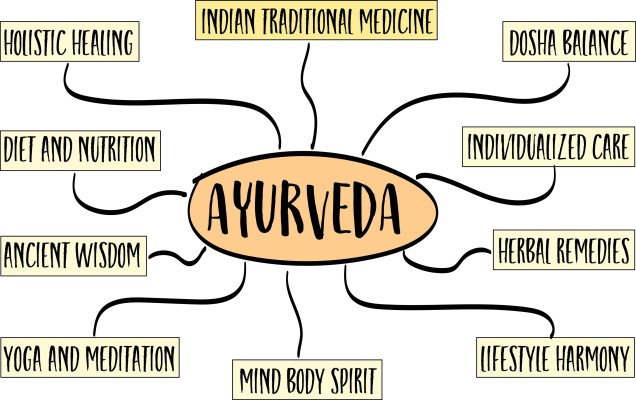
PC: AI generated
#6: Embrace Slowing Down: Conscious Reduction of Wants
Slowing down in Ayurveda is far more than just “less stress” or “less work.” It involves embracing the deliberate, conscious reduction of wants (aparigraha), which helps refocus energy toward holistic goals.
This isn’t about aiming for less in life; it’s about detaching from immediate, individual results and recognizing your place in a larger ecosystem. It means shifting focus away from you: ‘Your wins’ , ’your individual goals’, ’Your definition of fair’ and ‘your definition of right’.
Slowing down allows you to reclaim the energy previously spent on chasing external validations and instead focus that energy back toward holistic growth alongside the well-being of the world around you. This profound shift ensures your actions create lasting harmony, not just temporary satisfaction.
The Healer Within
Ultimately, Ayurveda asks you to become your own greatest healer through disciplined self-awareness. The Harmonics of Life: A Brief Introduction to Ayurveda is a good start. It starts by taking the foot off the accelerator and truly looking within. By unlearning the external pressures and listening to the deep, steady voice of your body, you can create the necessary harmony to live a balanced and vibrant life.