
Introduction
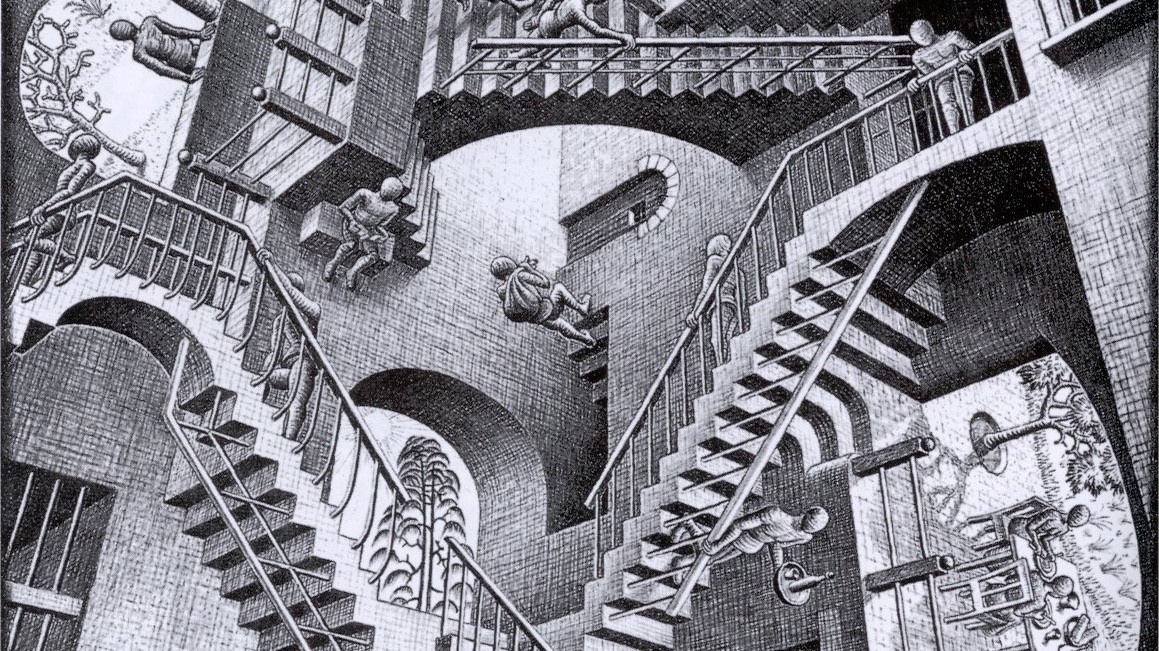
In a world overflowing with information, we often mistake knowledge for understanding. We see isolated pieces of truth but struggle to grasp the bigger picture. Our modern way of thinking has been shaped by specialization—breaking problems down into smaller parts and analyzing them separately.
While this approach has led to scientific and technological advances, it has also fragmented our perception of reality. To truly understand the nature of existence, we must shift between micro and macro perspectives, recognizing how individual elements fit into the larger whole.
At the heart of this exploration lies a profound question: How do things coexist?
The universe, at every scale, is a network of interdependent systems. Galaxies form through gravitational interactions, ecosystems thrive through symbiotic relationships, and even human societies function through a web of connections.
Nothing exists in isolation.
Yet, we often perceive the world in terms of separate entities rather than an interconnected whole. This limited perspective leads to imbalances—both in our personal lives and in the broader world.
One reason for this imbalance is our fragmented focus. We analyze aspects of reality in isolation without considering their broader implications. Take, for example, a simple breakfast choice—a box of cereal or a pack of Pop-Tarts. When we pick up the box, our focus is drawn to the marketing claims: “High in Fiber,” “Now with Whole Grains,” or “Low-Fat!” We flip the box over, scanning the nutrition facts—calories, sugar content, and a list of ingredients filled with preservatives we can barely pronounce. This seems like an informed decision-making process.

PC: Google images
But what we don’t see is the larger picture: the industrialised food system that produces these items, the depletion of soil nutrients from monoculture farming, the marketing psychology that makes us believe “low-fat” means “healthy,” and the long-term metabolic effects of consuming ultra-processed foods. The information we focus on is not the whole truth but a carefully curated slice designed to influence our perception.
Beyond external realities, our inner world is also affected by this lack of holistic vision. We often chase goals—money, success, relationships—without understanding how they fit into the greater scheme of our lives.
We compartmentalize different aspects of existence, treating work, health, and happiness as separate pursuits rather than interconnected elements of a balanced life. This results in stress, dissatisfaction, and a constant sense of something missing.
To cultivate true wisdom, we must learn to zoom in and out, shifting between details and the larger picture.
Many philosophical traditions and modern thinkers have explored this idea from different angles. In the following sections, we will explore some of these perspectives and how they help us develop a more integrated, aware, and fulfilling way of living.
1. The Cosmos and the Nature of Coexistence
At every level of existence, from the microscopic to the cosmic, wholeness and interdependence go hand in hand. A single cell in your kidney is a tiny marvel—it has its own functions, structure, and life cycle. It is complete in itself. Yet, on its own, it’s useless. A kidney is also complete—it filters waste, balances fluids, and does its job perfectly. But a kidney without a body? Just a well-hydrated paperweight.
This pattern of self-contained yet interconnected systems repeats itself everywhere. The Earth, for example, is a distinct planet with its own climate, ecosystems, and life forms. But it exists within a larger solar system, held in place by the gravitational pull of the Sun. The Sun, in turn, is part of a galaxy, which is part of an ever-expanding universe. Nothing exists in true isolation—everything is part of something bigger.
What binds all of this together? Energy. At the atomic level, energy allows particles to form elements. At a planetary level, it fuels life through sunlight. In space, it bends time itself (shoutout to gravity). The universe isn’t a chaotic mess of floating objects—it’s a finely tuned web of coexistence, where everything, from a cell to a star, plays a role in the grand design.

Yin-Yang
2. The Dance of Opposites: Yin-Yang and the Balance of Forces
The Yin-Yang philosophy of Taoism teaches that existence is shaped by the interplay of opposites—light and dark, passive and active, expansion and contraction. These are not forces in conflict but complementary energies that sustain harmony.
“Know the masculine, but keep to the feminine, and be a ravine to the world.” (Tao Te Ching, Chapter 28)
This does not suggest that one energy is superior to the other. Instead, it highlights the importance of embracing both within oneself. Yin represents receptivity, intuition, and stillness—the qualities often associated with the feminine. Yang embodies action, logic, and assertiveness—the traditionally masculine traits. Every individual, regardless of gender, possesses both energies.
A person who is all Yang—driven, forceful, constantly on the move—may achieve success but often at great personal cost. They risk becoming rigid, aggressive, or emotionally disconnected, mistaking force for strength.
Conversely, a person who is all Yin—passive, introspective, waiting for life to unfold—risks stagnation, becoming detached from action and influence.
An excess of one without the other leads to imbalance. Both extremes lead to suffering, either through exhaustion or inaction. The true path of mastery lies in knowing when to push forward and when to pull back, when to act and when to allow.
This balance is not static; it is a dance. A skilled martial artist does not rely solely on power but on fluidity—meeting force with softness, aggression with grace. A wise leader does not dominate but listens, knowing that strength without wisdom is reckless and wisdom without strength is powerless.
Even within nature, we see this dynamic: the tides ebb and flow, seasons shift, and breath itself alternates between inhalation and exhalation. To live well is to understand this rhythm, to embody both the sharp edge of action and the deep well of stillness.
3. The Buddhist Middle Path: Balance in Action

Buddha
Before attaining enlightenment, Siddhartha Gautama—the Buddha—spent years swinging between extremes. As a prince, he indulged in every luxury imaginable, shielded from suffering. Later, in search of truth, he renounced all comfort, embracing severe asceticism—starving himself, meditating for days without rest, pushing his body to the brink.
Yet, neither indulgence nor deprivation brought him closer to wisdom. His realization came by a river, when he overheard a music teacher telling his student:
“If you tighten the string too much, it will snap. If you leave it too loose, it will not play.”
In that moment, Siddhartha understood: truth lies in balance. Neither excess nor self-denial leads to liberation—only the Middle Path does. This is why mindfulness meditation is the cornerstone of Buddhist practice. Unlike rigid dogma or extreme discipline, meditation is about cultivating awareness—observing the mind without clinging or resisting. It is not about erasing thoughts but seeing them clearly, without being ruled by them.
The Middle Path is not passive—it is active balance. A meditator learns to sit with discomfort without suppressing it, to experience joy without becoming attached. Over time, this awareness transforms daily life. One no longer reacts impulsively to emotions but observes them, allowing wisdom to emerge. In essence, mindfulness is the practical application of the Middle Path—it trains the mind to find equilibrium in every moment. And in that balance, enlightenment is not some distant goal, but an unfolding reality in the here and now.
4. Detachment as Freedom: The Stoic Perspective
The Stoics understood a fundamental truth: we suffer not because of external events, but because of our attachments to them.

Stoicism does not advocate indifference—it teaches detachment with clarity. Life is unpredictable. Fortune rises and falls, relationships change, health fades. If our peace depends on things outside our control, we are bound to suffer. Instead, Stoicism urges us to shift our focus: control what you can, accept what you cannot. This is not resignation; it is empowerment.
This principle ties directly to seeing the whole. A mind caught in fleeting emotions or external validation is fragmented, unable to perceive life in its entirety. Detachment allows us to zoom out, to see setbacks as temporary, to recognize that what we resist often loses its grip the moment we stop clinging. True freedom is not about escaping life’s chaos but learning to stand unshaken within it. When we let go of what we cannot control, we create space for what truly matters—wisdom, resilience, and a deeper understanding of our place in the grand design.
5. The Paradox of Choice: When More Isn’t Better
Modern life is defined by choice. We have endless options—what to eat, what to watch, what career to pursue, who to date. At first glance, this seems like freedom. But as philosopher J. Krishnamurti pointed out, more choices do not necessarily lead to clarity—often, they lead to confusion.
Consider the experience of shopping for something as simple as toothpaste. Do you want whitening? Extra whitening? Sensitivity relief? Cavity protection? Fluoride-free? With charcoal? Suddenly, a straightforward decision becomes a mental maze. Instead of satisfaction, we feel decision fatigue, the creeping anxiety that we might have picked the “wrong” option.
The paradox of choice is that having more options does not lead to wholeness—understanding does. If we deeply understand what we need, the decision is effortless. The problem isn’t choice itself; it’s the illusion that fulfillment lies in picking the “perfect” option. Wholeness comes from seeing beyond choice—understanding that no single decision will complete us.

Krishnamurti argued that real freedom is not the ability to choose between distractions but the ability to see through them. When we stop obsessing over choices and focus on understanding what truly matters, life becomes simpler—not because there are fewer paths, but because we finally see where they all lead.
6. Individuation: The Journey to Wholeness
Unlike Freud, who saw the unconscious as a messy storage unit of repressed desires, Carl Jung saw it as a vast and mysterious realm—not a problem to be fixed, but a treasure to be uncovered. He stated this journey as integrating the different parts of ourselves into a cohesive whole.
At the heart of this journey is the conscious vs. unconscious mind. Our conscious mind is what we identify with—our thoughts, decisions, and the image we present to the world. But beneath it lies the unconscious, filled with forgotten memories, suppressed emotions, and the aspects of ourselves we don’t fully understand. To ignore the unconscious is to live only half a life, blind to the forces that truly shape us.
One of these forces is the Shadow Self—the parts of us we reject. Maybe it’s anger, vulnerability, or ambition. Instead of acknowledging these traits, we push them into the unconscious, only for them to manifest in unexpected ways—in projections, emotional triggers, or patterns we can’t seem to break. Jung’s answer? Face the Shadow, integrate it, and transform it into a source of strength.

Carl Jung’s Model of consciousness
Then there’s the Anima and Animus—the feminine and masculine energies within us. Much like Taoism’s Yin-Yang, Jung believed that true self-awareness means embracing both. Balance is key, and individuation is the process of finding it.
Jung also introduced the Collective Unconscious—the idea that we inherit deep, universal symbols (archetypes) that shape our experiences. The Hero, the Wise Old Man, the Trickster—these aren’t just myths, but psychological patterns within us all. Recognizing them helps us navigate life’s challenges with greater clarity.
Wholeness, according to Jung, isn’t about being perfect or “fixing” yourself. It’s about seeing the whole of who you are—light and shadow, masculine and feminine, conscious and unconscious—and bringing it all into harmony.
It’s not an easy path, but as Jung himself put it, “Until you make the unconscious conscious, it will direct your life, and you will call it fate.”
7. The Mind’s Focus: The Attention Paradox
In a world overflowing with information, attention is our most valuable resource. Yet, paradoxically, the more we try to focus on everything, the less we truly see. Neuroscientist Amishi Jha describes attention using two metaphors: the spotlight and the floodlight.
The spotlight is our focused attention—when we zoom in on a task, a conversation, or a problem. It’s what allows us to read a book or listen intently to a friend. The floodlight, on the other hand, is our broad awareness—taking in the environment, noticing patterns, sensing the mood in a room. Both are essential.
But modern life has hijacked our attention, making us believe we must use both at full intensity, all the time.
Think about scrolling through social media. Your mind is in floodlight mode, scanning an endless stream of information—news headlines, vacation photos, product ads, memes. But at the same time, you’re trying to focus on something important—a work email, a conversation, an idea. This constant switching exhausts the brain. We feel scattered, overwhelmed, unable to engage deeply with anything.
The irony? We believe multitasking makes us more productive, but in reality, it fractures our awareness.
We check our phones while eating but don’t truly taste the food. We half-listen in conversations while mentally drafting responses. Our minds are everywhere, yet nowhere at all. This is why many ancient traditions, from meditation to philosophy, emphasize training attention—learning to shift between spotlight and floodlight intentionally rather than letting our focus be hijacked.
True understanding requires knowing when to zoom in and when to zoom out. A scientist examines a single cell but must also grasp the entire organism. A leader makes daily decisions but must also see long-term consequences. A fulfilled life isn’t about paying attention to everything at once—it’s about knowing what deserves our focus and when. Only then can we see the whole picture, rather than just scattered fragments of it.

PC: Google images
Seeing the Whole Beyond the Parts
Each of these philosophies—Taoist balance, Buddhist mindfulness, Stoic detachment, the paradox of choice, Jungian individuation and the nature of attention —could be a blog on its own (or an entire book). Each one zooms in on a particular aspect of wholeness.
Perhaps the pursuit of wholeness isn’t about choosing the ‘one right’ path. No one ideology is better than the other. They all ripened according to their respective era’s. There is no moral obligation of ‘right’ or ‘wrong’. You don’t need to choose a corner.
In creating a holistic vision, we must understand each philosophy in its depth, as well as their context and contribution to shaping the current understanding of human consciousness.
To see the whole, we must embrace the duality of the micro and macro— between focusing on the details and stepping back to see the grand design. Be able to oscillate between a mole and a mountain, and back. By being aware of our internal feelings as well as our external environment.
The more we learn to integrate these insights, the closer we come to something resembling a wholesome life—not in theory, but in practice.