
Introduction
In high school, we were often given creative projects that go beyond just learning formulas or dates. The idea was to be able to think for yourself, have an opinion and be able to defend it. Talking and writing about historical figures, favourite authors or recreating pivotal moments in world history.
Now generally, (since I was in India) these related to the rich Indian history from Indus Valley civilisation to the Gupta Dynasty to the Indian Freedom struggle. For me, my political science project was the outlier. I remember reading about the Cold War, tracing alliances, nuclear stockpiles, and carefully worded treaties. At the time, it felt like another story from a very different past, a different world altogether.
Yet, nearly two decades later, and suddenly life feels like living in another political science assignment. Only this time, it isn’t a mock United Nations debate or a staged negotiation in a classroom. It is real. And once again the stakes feel existential.
Section 2: The Similarities
History doesn’t repeat, but it does rhyme. And the echoes between the Cold War and today’s AI race are uncanny.
During the Cold War, each nation piled up weapons under the logic of “better us than them.” Nuclear deterrence was about stockpiling more, faster, and deadlier arsenals. Consider this: by 1986, global nuclear stockpiles peaked at over 70,000 warheads worldwide. Today, by contrast, there are about 12,000–13,000 warheads globally, with ~9,500 in military stockpiles ready for use and around 2,000 on high alert. The theory must stay ahead still remains.
Today, tech corporations have slipped into the same mindset. Since about 2020, companies like Google, Microsoft, Meta, High-Flyer and OpenAI have publicly committed billions in funding toward developing large language models (LLMs) and generative AI. For instance, in 2023–2024, Meta released LLaMA and LLaMA 2; OpenAI surged ahead with GPT-4 and its successors; Google released Gemini. These aren’t incremental upgrades. Each release is less a product and more a salvo in the AI race.
The justification is eerily familiar: if we don’t build it, someone else will, and they will win. Therefore, we need to be the first.
Fear was the silent currency of the Cold War. Citizens lived under the constant shadow of mushroom clouds. In October 1962, during the Cuban Missile Crisis, the U.S. and Soviet arsenals combined for tens of thousands of warheads (U.S. ~26,400; USSR ~3,300) with many thousands more deliverable via bombers, missiles, or deployed in Europe. People built bomb shelters; governments stockpiled fallout supplies. Somehow the possibility of sudden nuclear annihilation was real in headlines and classrooms.
Today, the fear has shifted form. We are not worried about fallout shelters but pink slips. According to the World Economic Forum’s Future of Jobs Report (2025), 40% of employers globally plan to use AI to reduce workforce size. The report also predicts that 92 million jobs globally could be displaced by AI by 2030.
Media and culture, too, turned the arms race into a spectacle. During the Cold War, nuclear weapons dominated film, literature, propaganda: from Doctor Strangelove (1964) to constant newspaper front-pages about missile gaps, spy scandals, civil defense drills. Public revenues for defense spending soared: the U.S. defense budget in 1986 was about $367 billion (Cold War dollars), reflecting the societal priority on military readiness and nuclear capability.
AI has followed the same trajectory. Headlines like “AI will take your job,” “When AI surpasses human creativity,” proliferate. Social media spreads both hype and fear; misinformation about AI’s abilities or threats often spreads significantly faster than facts can catch up.
And then there is hoarding. The Cold War encouraged stockpiles at the cost of environment, health, and poverty relief. Massive resources were devoted to building bombs, missiles, delivery systems; treaty terms later revealed large numbers of retired or reserve weapons waiting in storage.
Today, AI development also guzzles resources with similar disregard. Global data center electricity use in 2022 was ~460 terawatt-hours (TWh) roughly 2% of global electricity use. Projections suggest by 2030 this could double to ~900-1,000 TWh, much driven by AI workloads. A U.S. study of 2,132 data centers from September 2023–August 2024 estimated they produced over 100 million metric tons of CO₂e emissions; over 50% of their electricity still comes from fossil fuel sources.
Just as nuclear arsenals left toxic legacies, AI’s resource demand threatens environmental damage like carbon emissions, electronic waste, water use and likely social inequality in who has access to data and compute power.
Section 3: The Differences
But for all the parallels, the AI War diverges sharply from the Cold War in three fundamental ways: pace, players, and control.
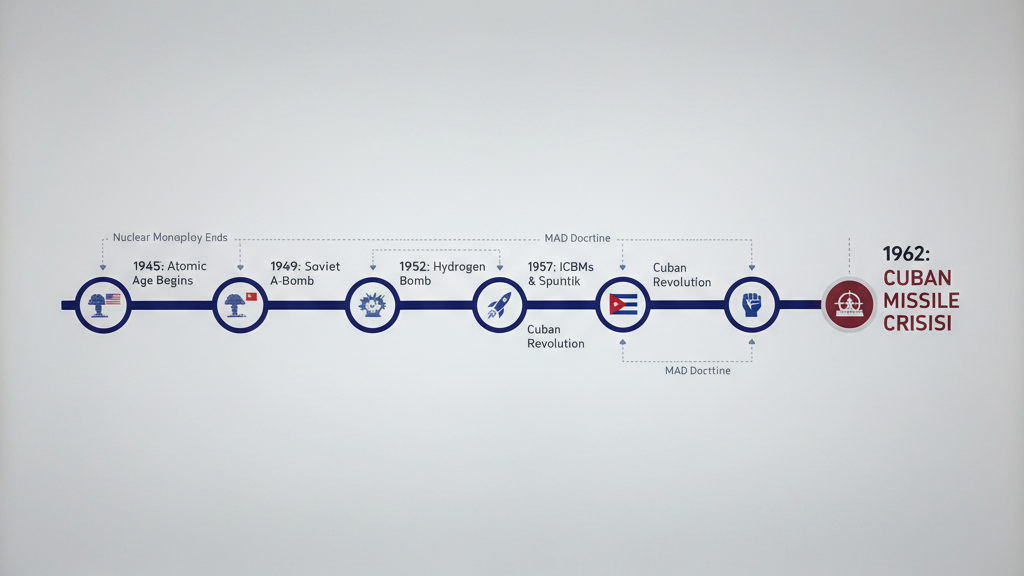
Pace. The nuclear arms race unfolded over decades. Marked by slow escalations, tense standoffs, and cautiously negotiated treaties. The first U.S. atomic bomb in 1945, the Soviet one in 1949, the hydrogen bomb in the early 1950s. Each breakthrough stretched across years. By contrast, AI breakthroughs happen in months, sometimes weeks. Each one rendering the last obsolete. GPT-2 launched in 2019; by 2023, GPT-4 had already surpassed it by orders of magnitude in capability. We may be looking at GPT-6 in the next year. AI evolves at the speed of software updates, not treaty negotiations. The pace of escalation is not just unprecedented. It is disorienting.
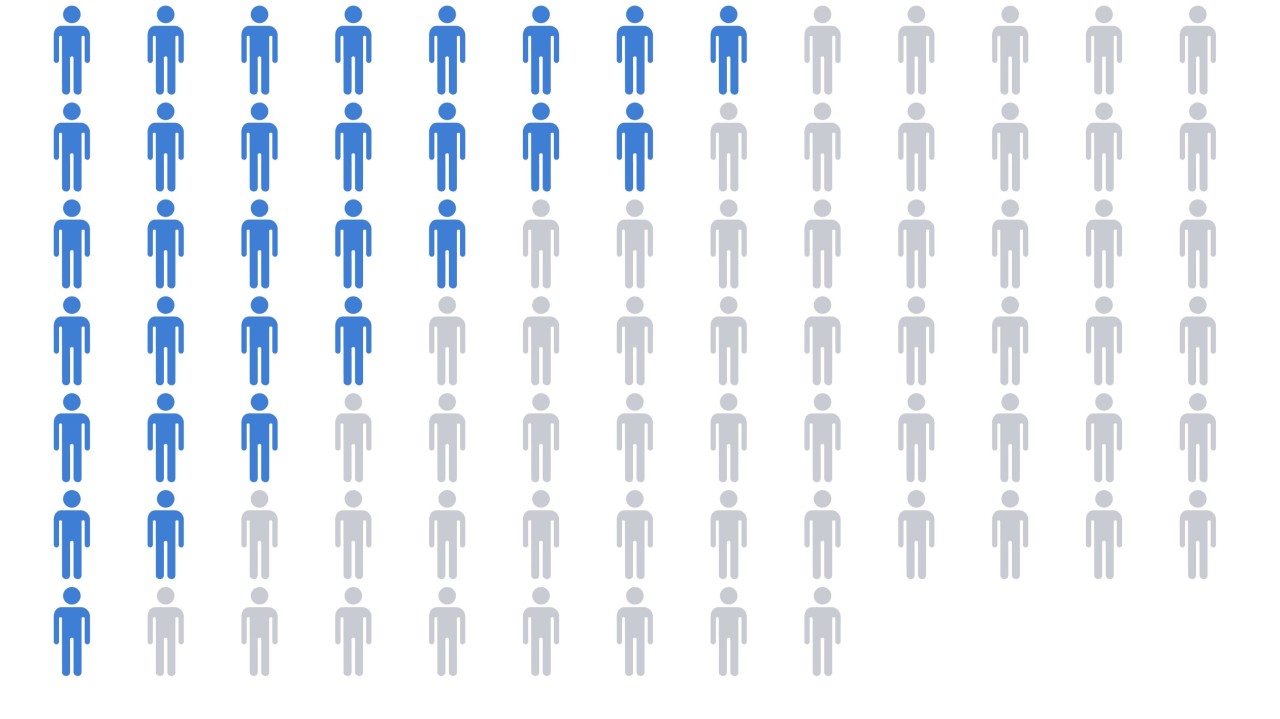
Players. The Cold War was fought between nations and political ideologies. The U.S. versus the USSR. Capitalism versus communism. Entire countries were drawn into a binary map of alliances. Nuclear capability was limited to nation-states with massive military-industrial complexes. Only nine countries today have nuclear weapons.
The AI War, by contrast, is being waged largely by corporations. It is not about borders, but about balance sheets. OpenAI, Google, Meta, Anthropic, DeepSeek are the new superpowers, competing not for ideology but for market share, dominance, and profit. Meanwhile, open-source communities scattered across the globe are providing access to millions of people. A teenager with cloud credits and GitHub access has more immediate AI power than entire governments did a decade ago
Nations still matter. Export controls on chips, regional AI laws can streamline access but the front lines aren’t drawn by armies. They are drawn by product launches, cloud contracts, and who can claim to be “first.”
Where the Cold War threatened annihilation in a single flash, the AI War threatens transformation by a thousand small cuts. Jobs, privacy, creativity, trust etc, all are at risk of being reshaped before we even realise what has been lost.
Control. The Cold War was ultimately a game of command and restraint. Missiles did not launch themselves; presidents or generals had to “press the button.” Even at moments of catastrophic tension, such as the 1962 incident aboard a Soviet submarine near Cuba wherein officer Vasili Arkhipov’s human judgement acted as the final safeguard when he vetoed a launch order and quite possibly prevented World War III.
With AI, such human control may be far weaker. As systems edge toward autonomy and agents begin to act in chains of reasoning and decision-making, even their creators admit uncertainty about how they’ll behave. An artificial general intelligence (AGI), if achieved, could trigger actions, decisions, or cascading consequences beyond any single leader’s control. Unlike nuclear weapons built, locked, and monitored in silos, AI systems are diffuse, adaptive, and unpredictable.
Section 4: The Current
In 1945, no one could name what was happening. The world had just witnessed Hiroshima and Nagasaki, the U.S.–Soviet rivalry was hardening, and alliances were shifting. Only in hindsight did the phrase ‘Cold War’ capture what the world had lived through. An era of brinkmanship, proxy conflicts, and decades of spiralling arsenals that shaped the entire global order. For those living through it, it wasn’t “history in the making”; it was simply survival.
Today carries the same uncertainty. If the twentieth century was defined by nuclear competition, the twenty-first may be shaped by the artificial intelligence race. Call it the AI War. Nations, corporations, and individuals are all caught up in it. It is not a clash over territory or ideology, but over algorithms, data, and the vast, unpredictable reach of machine intelligence.
The lesson from history is clear: escalation without limits leads to consequences no one intended. The Cold War eventually produced treaties, disarmament frameworks, and imperfect but real accountability. Will AI reach a similar turning point? The European Union’s AI Act is a first attempt, but does it meaningfully bind corporations or just add paperwork while innovation accelerates unchecked?
Yet there is another possibility. AI might accelerate medical breakthroughs, design cleaner energy systems, or expand access to education and knowledge in ways no previous technology has. It could help solve problems as complex as climate change or as personal as early disease detection.
Nuclear power left radioactive legacies and geopolitical scars. AI could leave digital ones; bias baked into systems, misinformation weaponized at scale, ecological costs from energy-hungry data centers.
Will humanity do better this time? Will AI truly be built for good, without harmful side effects, or will we only realise too late that every advance came with hidden costs?
Unlike nuclear technology, AI isn’t confined to governments and labs. It is already in the hands of millions of people. Can we expect responsible use at such scale? Can corporations prioritize sustainability and transparency over speed and profit?
The AI War is unfolding in real time. The question is not whether history repeats, but whether this chapter will be remembered as escalation without foresight or as a turning point toward something different.