
I attended 4 networking events in 2 days, a 2-day AI conference, 3 scheduled meetings with existing clients and followed up with 12 potential clients. Boy! There is only so much social interaction that I can do. Yet, there is always more to come!
When you meet so many people within a small window. It can seem daunting. Some you instantly connect on a thought level, which quickly translates to exchanging phone numbers and/or business cards or connecting on LinkedIn and/or Instagram. Others you forget by the next day.
Every now and then you meet a person that you believe will do wonderful in life. They are passionate, put in the hard work and present with courage even when things are not going their way. You don’t need to know their life story to form such an opinion. For some reason you know it instinctively.
It may be their non-verbal communication, their sincerity or their humility. There is an authenticity that comes through in a short conversation, a short duration that is difficult to fake. This happens unconsciously; without you giving it any thought.
And every now and then, you look at your own life and think of yourself as that person. We all love to be the hero in our own stories. At least in our own version.
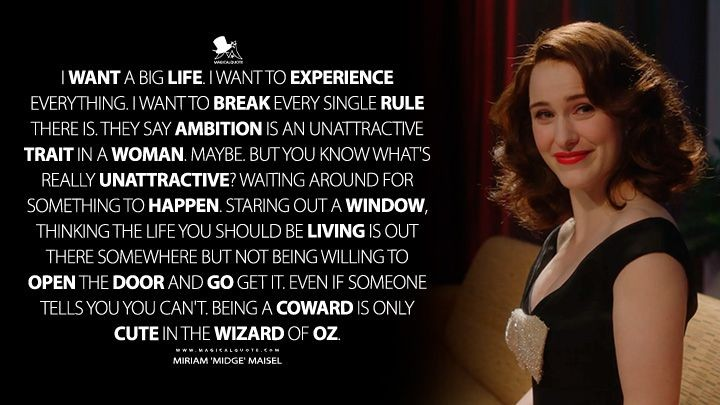
PC:Mrs.Maisel
We try and relate our own struggles to stories, books, comics, theatre, ballet or movies. We build a world around us with heroes and villains. With protagonist and antagonist. With good and evil. With right and wrong. With heaven and hell.
At the root of all of these concepts, is our natural ability to think. Our brains are developed, unlike that of other mammals, to think and remember. This average 3 pound wonder contains within it about 2.5 million gigabytes of information. Information stored in neural pathways, networks and electrical impulses. Our memory is both our greatest boon and our biggest bane.
Thoughts are small electrical impulses that run up and down a neural tract while a memory is a solidified neural network caused often by repetition of the same electrical pathway. In so many ways, we switch between thought and memory seamlessly.
I want to talk about 3 rules of thought:
1. Thoughts don’t cease
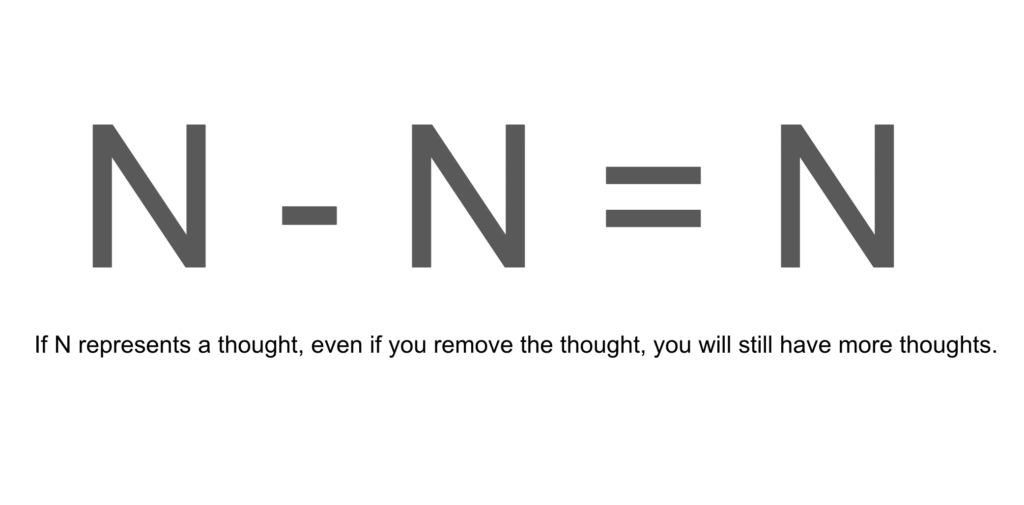
Thoughts are all-encompassing in nature. It is not a currency that is spent. Or a resource that will finish. Or a species that will extinct. No matter how much ever you think, you will always have more thoughts. If you leave one topic, you can think about the next. You can think about people, places or processes. You can think about yourself, others or all of humanity. You can think about past, present or the future.
Thoughts are infinite and will fill your mind space no matter what. When you control the direction of your thoughts, you find focus. In an activity, or a person or a question you are trying to solve. Sometimes you use repetition to train your thoughts like riding a bicycle or memorising an equation.
Other times its our thoughts that consume us. Render us incapable, unable to reach a conclusion or act. Or we tend to repeat a thought on loop. Which means we are firing away the same neural pathway again and again.
If we are not aware of our thought patterns, we simply let the pathways dictate our thoughts, actions and in turn behaviour. It is one of those things that is tied to our consciousness. What differentiates a human corpse from a human body.
2. Thought cannot exist in isolation
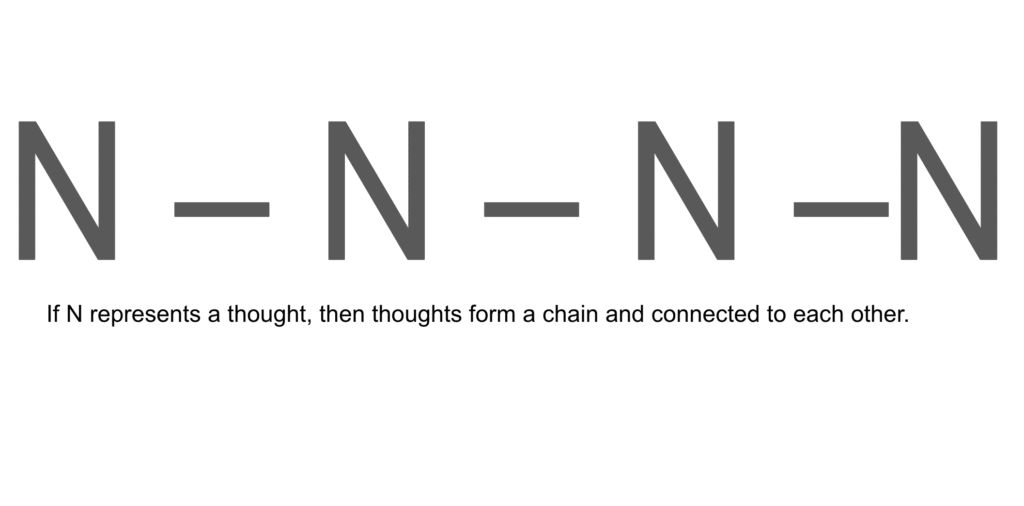
Have you heard of the phrase chain of thought. This is exactly the second phenomenon. Thoughts often connect as you think of one topic to the next. Sometimes at a lightening speed wherein you loose track of the connection in the first place.
Our neural networks are wired to connect with each other to form the shortest pathways. Thoughts instinctively associate to one another. When we read or hear a new thought, it automatically gets registered as an extension of an existing thought. This new thought either reinforces an existing thought or becomes an opponent of an existing thought. Either ways you have to associate a thought to another.
A new thought that doesn’t align with your existing beliefs or thoughts are repulsed. We instinctively look for arguments to counter or try find loopholes in this new thought. We fight tooth and nail to preserve our existing thoughts. Somehow it feels like it a physical assault to our being.
New information or learning helps us rewire the existing neural pathways but it can be a very difficult experience when it happens to you.
3. Thoughts need to align to reality
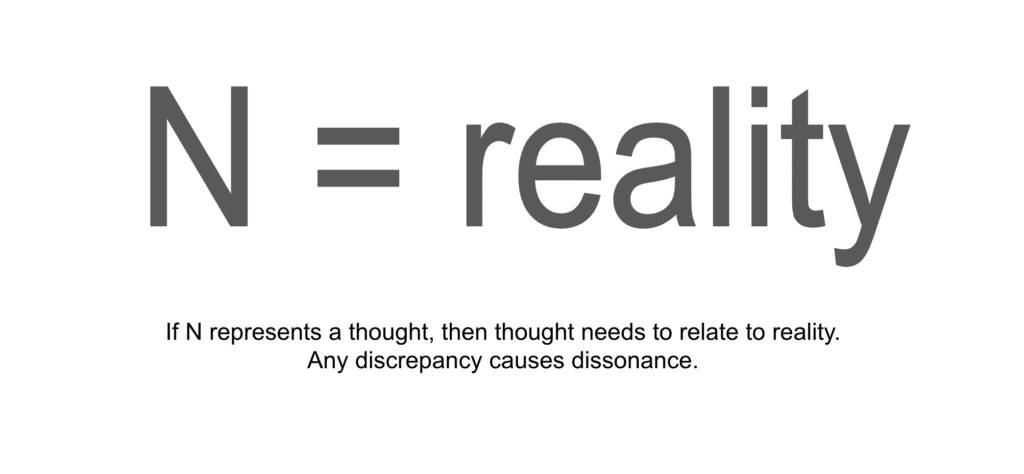
Thoughts are intangible and can stretch to greatest heights without physically existing. It can motivate humans into action and thereby translate into results or impact. However, not all thoughts have the same impact. Thought is the smallest unit of change to human behaviour.
With thought you have an expectation of result. For example, if I study well I will get good grades. There exists a neural pathway that has experienced this correlation or believes it to be true. Conflict arises when you have two opposing thoughts that cannot be reconciled.
Similarly, thoughts need to be aligned with reality. If there is a difference between what there is and what you think, the results would not be as per expectations. This phenomenon is what causes heartbreak, depression and other negative emotions.
When thoughts do align with reality, you feel a sense of harmony. Like when you din’t study and failed. You are in a much better position to align to this failure versus when you studied hard and still din’t get results. Which happens anyways!
I guess this is why people say life is the best teacher, because at school you align your answers to truth in books. With life you need to align your thoughts to reality.
With AI banking on artificial neural networks and being able to generate content, I wonder if these rules will apply to AGI. Or how easy or difficult it would be to change its opinion once the opinion is set (inputed). Will a set of contrasting data create a dissonance? Or will AI choose sides? Will the increasing data set ever become overwhelming to AI? Will higher CPU power or a bigger chip really change the thought pathway or the current association paradigm?
Drop me a message if you think you have the answers.