
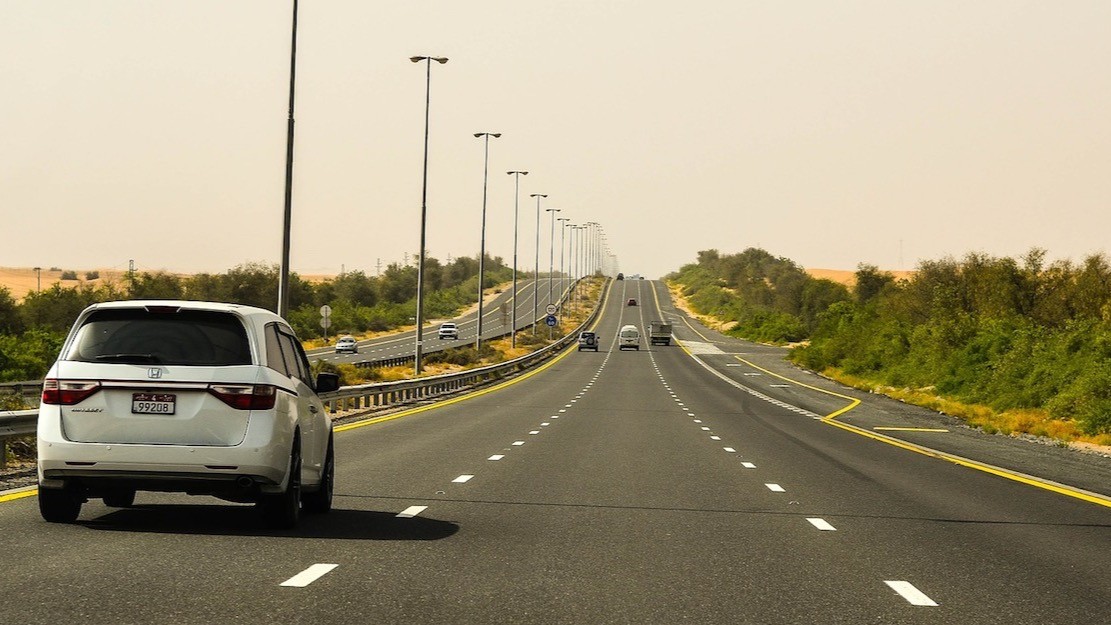
It was my last driving class. I was driving on the highway, the speed limit was 120 km/hr and I was at 100. In that moment, the world seemed to slow down as I become aware of my breath, my being as well as my foot on the accelerator.
This 100 is now my new equilibrium and maintaining it wasn’t as easy as I thought. Other trucks and trailers traveling at the same speed, on the same road, at the same time as you are your pegs that hold you to your reality.
It is a very delicate balance. If you even slightly touch the accelerator you might go over, if you don’t you will loose speed. And whatever else you do, you can’t touch the break unless you absolutely need to. Control the car with accelerator on the highway. My instructor explains the rules of passing the damn test.
You see, I have been driving for almost 20 years. I know how to drive. However, I started my meditation journey about a year ago. It was not an easy feat. I somehow had the belief that I could not sit still. The thoughts that keep running in the background don’t stop.
It took me about 21 days and a candle to create this habit. For my brain and my body to get trained to understand what it means to focus on your breath.
To hold your breath as the central string that keeps you oriented in the deep sea of consciousness. To practice the control of keeping your attention, letting your thoughts come and go. To detach your thoughts to your definition of self. To really have the awareness of being observant to your breath as well as your surroundings. To balance you and the energy around you.
Somewhere in the 60 mins at 100km/hr, I had an epiphany.
Most of our lives, we spend our energy wanting reach the 100. We are told to put effort, learn the skillset, bear the pain of hard work. All to reach this imaginary goal. The promise being that once we reach this goal, we will feel complete. Satisfied. Bliss. Maybe even happiness.
We seldom prepare for maintaining that 100. What do we do once we reach our goal? How to we maintain that equilibrium? Where the thrust of our effort shifts from pressing the accelerator hard to a slight touch. No more, no less.
Keep still and be aware of your surrounding– that is all that you really need to practice.
Most meditation practices will instruct you to do just this. The highest form of mindfulness is when you reach such awareness in yourself while performing your day-to-day tasks. I assume like when you can focus on your breath while still driving a car. Who knows?
Surprisingly, I was both tired and drained while driving. We stretched as much as we could in 30 minutes, took a u-turn at the next round about and came back. It was early afternoon, most of the early morning traffic had cleared. Empty highways and no destination. Just practice.
Yet, there was this sense of listlessness. I could feel the despair born out of repetition and boredom. The umpteenth drive down the same highway for the sake of practice.
Driving, in most other scenarios, is a fun and happy activity. A hobby even. It brings with it the enthusiasm of visiting new places, new people or even the satisfaction of reaching from point A to point B independently.
The same activity aka driving, can be an enjoyable to someone and be boredom to another. Doing it the first time can be exciting but if you get stuck in traffic while coming back home everyday, it can be a pain in the ass.
Isn’t this life’s biggest paradox– we want to be comfortable but also experience newness?
The same things that once brought us joy, become the bane of our existence. We strive to become comfortable but then crave crazy. Do we ever learn to keep still and enjoy the surroundings?
The whole learning to drive after ~20 years of experience was quite humbling. I could either fight that I know driving or simply accept the reality that for all practical purposes I need to learn to drive. Or at least to pass the test.
These viewpoints in life can be very persuasive. Especially the ones that we tell ourselves. As kids we don’t know, so we need to learn – math, science and history. As we grow up, we don’t just earn a degree, we earn the confidence that we know. Somehow this confidence like the driving licence resides in external approval. We can never be sure of ourselves without sounding arrogant. So we keep seeking external validation of our confidence.
As we grow older, we take this confidence a little too seriously. We forget that in order to maintain equilibrium, we do need to be aware of our internal being just as much as external validation. The control of the car rests inside, except maybe for self-driving cars!

PC: Boredpanda.com
In today’s consumption-driven instant-gratification world, convenience overrides growth. We want to be successful quickly. We want to be smart instantaneously. We want growth automatically. We forget that growth takes time.
We muddle up the lines between fair and favourable. We all want the traffic lights to green for us when we go onto the road. We want others to slow down so the we can pass. We want us to be first or best or have right of way. That’s favourable.
You understand the difference between favourable and fair, when you realise that the risk of entering the road is still yours. You don’t get extra points or extra safety because you merged correctly onto the road. The risk you undertake just by being in the car is the risk of living.
You don’t follow the rules to avoid fines.
You follow the rules so that irrespective of how others drive, you can control yourself.
You follow the rules so that it’s not your mistake that kills somebody else.
You may be the safest, most diligent driver. You may have never broken even a single rule. Never caused a single accident. Never gotten a single scratch on your car. You can still die in a car crash because of someone else’s mistake. Now you may wonder, if there is no additional benefit to following the rules why not disregard them altogether.
This is not unfair or disadvantageous, it is just the rules. Unlike GTA, you don’t win extra points for stealing a car. In life, you don’t win brownie points for following the rules. This is just the benchmark. This is fair.
You follow the rules because the world needs more safe drivers than not!
In the end, external factors can vary endlessly. Fair or not. They can have innumerable permutations and combinations of possible outcomes. If you are the driver, you decide how you want to perceive, proceed and progress.