

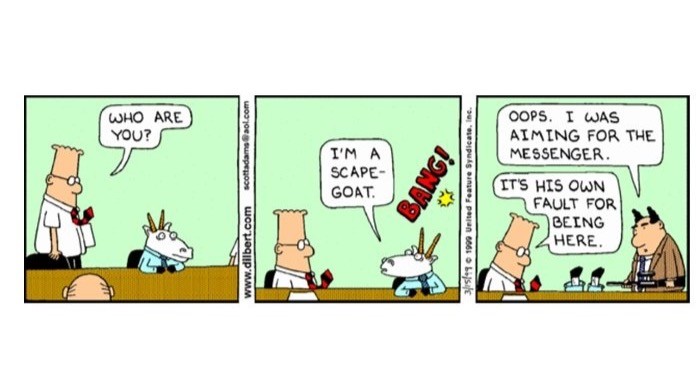
You are in a team meeting. Everyone nods. Smiles. The roadmap looks solid, targets are ambitious, and timelines are tight, but no one raises a red flag. Then, after the meeting, Slack lights up. Side conversations pop up. Doubts emerge. People talk. Just not where it counts.
Welcome to a culture where feedback exists, but not aloud. Where what is said is less important than who says it first. Where the messenger matters more than the message itself.
Maybe it is the senior person’s idea, so no one challenges it. Or the quiet team member who points out a risk is met with awkward silence. A great suggestion falls flat because it came from “the wrong person” or arrived at the wrong time. And a critical truth is buried, not because it is wrong, but because it is inconvenient.
Over time, leaders start to lose track of what’s real. They hear filtered optimism. Padded metrics. Polished presentations. And slowly, they begin to believe that no news is good news. But it isn’t.
The hardest truths often come in uncomfortable packaging. They interrupt our rhythm. They poke holes in our plans. And they’re easy to dismiss as inaccurate or incomplete. Mostly because they feel unpleasant.
This is where real leadership begins. Don’t shoot the messenger. Especially when you don’t like their message.
Because the goal of leadership isn’t to be right. It is to see clearly. And clarity often comes from the voices we almost overlooked.
1. Selective Listening: When Truth Gets Filtered by Ego
Leadership often comes with pressure to appear decisive, confident, and right. Over time, that pressure quietly reshapes how we listen. We don’t just hear feedback. We filter it. What aligns with our vision gets amplified. What contradicts it gets softened, reframed, or ignored altogether.
Ego doesn’t always show up as arrogance. Sometimes, it is the quiet urge to preserve momentum, to avoid disruption, or to protect the story we have already thought it through. When our identity is tethered to being the “visionary,” it becomes harder to entertain ideas that suggest we might be headed in the wrong direction.
This is what happened with Nokia in the early 2000s. Internally, engineers warned that the iPhone’s interface was a serious threat. User experience was shifting. The signs were there. Anchored in past dominance, leadership brushed off the concerns and instead, chose to focus on projected sales. They continued to innovate on hardware and legacy systems. Ego overrode insight. By the time they heard the message, it was too late.

PC: Flickr
True leadership isn’t about always being right. It is about being willing to hear when you might be wrong especially when the truth feels uncomfortable.
2. Echo Chambers: When Agreement Feels Like Alignment
It’s easy to mistake agreement for alignment. When multiple people say the same thing, it can feel like consensus. But consensus does not mean harmony. And repetition does not always equal truth.
Feedback loops are carefully navigated. People say what they think the leader wants to hear, especially if their appraisal is attached to it. If revenue is prioritised over everything else, then others quickly learn to keep ethics aside. Slowly, the culture rewards agreement over insight, diplomacy over honesty, and dissent becomes a career risk.
But here’s the paradox: sometimes, hearing similar feedback from multiple places is not an echo. It is a warning.
At Theranos, engineers, lab staff, and even partners raised technical concerns about the blood-testing device. But Elizabeth Holmes and her inner circle dismissed or silenced them. Framing doubts as negativity or disloyalty. Over time, a culture of fear replaced dialogue. The few who tried to raise the alarm were painted as difficult.
The cost? Billions lost. Lives misled. Reputations destroyed.

PC: People magazine
When similar feedback surfaces across roles and departments. It is not an echo. It is a signal. Great leaders know how to hear beyond the harmony.
3. Short-Term Output vs. Long-Term Vision
In the rush to meet this quarter’s targets or ship the next release, it’s easy to prioritize the tangible over the transformational. When leadership focuses only on immediate performance—metrics, margins, milestones. They often miss the ideas that shape the future.
Innovation doesn’t always look impressive in its early stages. It is messy, unclear, uncertain, and rarely ‘usable’ right away. But when feedback is judged only through the lens of “What will this do for us now?”, visionary opportunities often get shut down too early.
Consider Blockbuster, which famously turned down Netflix in the early 2000s. The idea of mailing DVDs felt too niche. Their existing model was raking in late fees and foot traffic. Why pivot?
Yahoo, too, declined to acquire Google. Twice. Their focus was on short-term ad revenue, not long-term search dominance. Both companies had the opportunity to listen, to rethink, to bet on the future. But their leaders chose to optimize the present instead.
Leadership isn’t just about current performance. It’s about pattern recognition, foresight, and uncomfortable bets. As the saying goes: What got you here, won’t get you there.

PC: Google images
4. Confirmation Bias: Mistaking Agreement for Evidence
Leaders often gravitate toward voices that mirror their own thinking. It feels efficient. Validating. Safe. And in a layered organizations, enough middle managers echo that sentiment. Sometimes out of belief, other times out of self-preservation. Eventually, agreement begins to sound like truth.
This is confirmation bias in action. When leaders surround themselves with agreeable minds or charismatic middle leaders who have mastered the art of “managing up,” dissenting perspectives get filtered out. Personal branding wins over technical challenge. The result? A reinforced loop of selective agreement.
Kodak had the technology for digital photography before anyone else, but leadership, backed by layers of internal support, doubled down on film. It was safe. It was proven. It was profitable until it wasn’t.
BlackBerry had loyal market share, beloved keyboards, and executives who believed business users would never abandon them. Dissent existed internally, but the bias toward “what’s worked so far” won out.
When leaders reward familiarity over foresight, they confuse volume with validity. Real alignment comes from tested perspective not echoed opinions.
5. Top-Heavy Listening: When Hierarchy Drowns Out Insight
Feedback isn’t a one-way street. It is a network. Yet, many organizations build their listening mechanisms vertically, assuming insight flows best from the top down. Feedback from juniors is considered unconventional and unimportant. Thus, senior voices dominate. Often, the frontline or junior insights get lost in translation or never surface at all.
Skip-level conversations, 360° feedback, and peer review loops aren’t just HR rituals. They are critical pressure valves. Without them, a culture can look stable while simmering with unspoken tension.
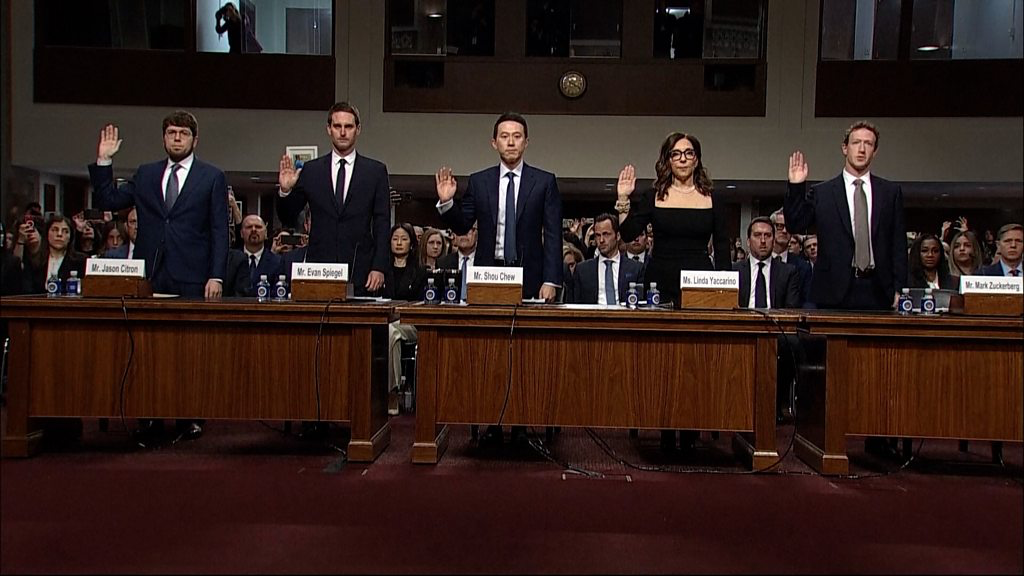
Take Instagram, for example. Internal research at Meta (then Facebook) revealed that the platform was negatively impacting teen mental health. These findings came from deep, on-the-ground research but leadership reportedly deprioritized them, fearing their implications for growth, revenue and engagement.
The insights existed. The risk was known, but the message was softened internally. Until it was too loud to ignore due to public outcry and government attention.
PC: BBC
When leaders rely only on filtered summaries and senior updates, they risk missing ground truths. Feedback needs altitude and depth. Because often, the people closest to you are the problem. And the ones closest to the solution are further away.
So what do we do:
- Increase self-awareness for your own biases
- Focus on ‘what is said’ not on ‘how it is said’
- Remove the bias of ‘who is saying’
- Don’t jump to conclusions
- Increase your circle of who will benefit (you, team, company, client, country, species)