
As I scrolled through social media recently, searching for a specific event I had seen earlier. I found myself sidetracked by an influencer I generally admire. Known for advocating healthy, sustainable eating over processed foods, this particular video was an anomaly: a passionate declaration about why branded paneer was superior to local versions which sparked a whole other debate. The experience brought two critical observations into sharp focus: first, the pervasive sensationalism inherent in social media storytelling, and second, a profound lack of depth in online discourse.
It led me to ponder: why is genuine intellectual depth so rare, even when we are inundated with research papers, countless books, endless podcasts, and powerful AI tools?
The limits of modern intelligence
1. The sword of knowledge democratization
The printing press promised a new era where knowledge was accessible to all, fostering an intellectually enlightened populace post the renaissance era. Yet, this democratization has, paradoxically, produced a generation of rote learners and practitioners often lacking true depth and nuance. Earning a degree, once a respected benchmark of specialized knowledge and rigorous study, now feels devalued as higher education becomes more widespread. The sheer number of graduates diminishes the perceived prestige of the qualification itself. This isn’t to say education is less valuable, but rather that the significance of the credential has shifted.
The issue lies in the superficial engagement with information: absorbing facts without truly understanding their context, implications, or the complex interplay of ideas. We have access to more information than ever, but critical thinking and the pursuit of deeper understanding are often bypassed in favour of readily available, yet superficial, conclusions.
2. The shortcut to shallowness
The increasing ease and access to information and advanced tools like AI have introduced a tempting shortcut: cognitive offloading. While undeniably efficient, this often bypasses the very mental exercises crucial for developing intellectual depth.
When we delegate the heavy lifting of thinking to external tools, we effectively reduce the workout our brains get. The act of searching, sifting, analyzing, and synthesizing information ourselves strengthens neural pathways and refines our critical faculties.
We become adept at shortcuts rather than deep thinking. This fosters a dependence on external intelligence, leading to an intellectual laziness where the tools become a substitute for our own cognitive effort, rather than a complement to it. The ease of access, therefore, risks turning us into information consumers rather than active knowledge creators.
3. The uncomfortable truth
True intellectual depth is inseparable from two demanding virtues: intellectual humility and intellectual integrity. Intellectual humility is the courageous recognition of the limits of one’s own knowledge. It is the willingness to admit “I don’t know,” to question one’s deeply held beliefs, and to remain open to new evidence, even when it contradicts previous understanding. This is a difficult, often uncomfortable practice, especially in a world that rewards certainty and strong opinions.
Conversely, intellectual integrity demands that we apply the same rigorous standards of evidence and logic to our own arguments as we do to others’. It is about being honest with ourselves and about the quality of our thinking, rather than selectively gathering information that merely confirms our existing biases. These virtues require vulnerability, self-awareness, and a profound commitment to truth, often over comfort or convenience.
As Stephen Hawking famously noted, “The greatest enemy of knowledge is not ignorance, it is the illusion of knowledge.”
In an environment that encourages instant opinions and discourages self-doubt, cultivating such humility and integrity is a rare and challenging feat. The easy availability of information can, ironically, make us less humble, as we mistake access to data for genuine understanding.
4. Fact versus fiction
As Yuval Noah Harari eloquently points out, fiction is often cheap to produce and remarkably effective at selling, precisely because it provides an escape, a soothing narrative that aligns with our desires or confirms our biases.
As the saying goes, “A lie can travel halfway around the world while the truth is still putting on its shoes.”
Facts, on the other hand, demand a much higher price. They require rigorous data collection, meticulous research, and the painful process of deriving meaning from complex realities. The effort involved in acquiring and publishing factual, evidence-based knowledge is substantial, and consuming it can be equally demanding.
Facts rarely offer the comforting balm of fiction; instead, they challenge, question, and compel us to think more deeply, to grapple with uncomfortable truths, and to adjust our worldviews. This active engagement is inherently less “soothing” than passive consumption of entertaining narratives.
The very nature of intellectual depth. It demands effort. A capacity to unsettle. This makes it a less popular choice than the comforting embrace of fiction.
5. The paradox of information overload
The modern era presents a staggering paradox. We mistake the sheer volume of information raw, unconnected facts and data for true knowledge or wisdom.
As John Naisbitt observed, “We are drowning in information but starved for knowledge.“
Instead of processing ideas deeply, we are forced to cope through a mechanism of intellectual triage, where we engage in skimming, not studying. We scroll, read headlines, absorb snippets, and move on. This mode of consumption allows us to cover a massive breadth of topics, giving the superficial feeling of being well-informed, but preventing the sustained focus required to forge deep, lasting connections between ideas.
This constant mental switching creates shallow learning pathways. Our brains prioritises rapid processing and storage of easily accessible facts, rather than the slow, effortful synthesis needed to build a nuanced worldview. The result is a population proficient in retrieving facts but often struggling to grapple with complex, contradictory concepts, illustrating a profound gap between the endless supply of data and the rare cultivation of wisdom.
6. The Siloed Mind
The old adage warns, “jack of all, master of none.” However, it is an incomplete saying. Rest of the saying goes “sometimes the ‘jack of all’ is better than the ‘master of one.”
Modern scientific inquiry rests on the assumption ‘all other things remaining constant’. Subsequently, intellectual culture, from academic specialization to the structure of professional careers, encourages us to become experts in narrow, specialized fields. While deep specialization is necessary for innovation, it comes at a profound cost: the decline of interdisciplinary synthesis.
Wisdom isn’t just knowing many facts; it is the ability to connect disparate facts to see how philosophy relates to technology, how history impacts economics, or how behavioural science influences policy.
This synthesis is the truly difficult work. Instead of synthesizing, we retreat into our silos, using specialized language to reinforce the borders.
This fragmentation of specialised knowledge prevents us from ever seeing the whole inter-dependent picture. When knowledge is broken into unconnected pieces, it becomes brittle and can be easily weaponized in the service of simple, short-sighted agendas, making even the intellectuals vulnerable to half truths.
7. The erosion of mental stamina
The entire architecture of the digital world is built around the delivery of instant gratification, and this reward system is directly eroding our mental stamina for deep thought. Every notification, every “like,” and every new piece of content offers a tiny, immediate dose of dopamine.
This trains the brain to expect rapid rewards, and makes the necessary effort of deep intellectual work which is inherently slow, requires delayed gratification, and often involves periods of confusion or struggle to feel exhausting and unrewarding.
We prefer the quick, easily digestible summary or soundbite over the time investment required to read an entire book or research paper. This cultural preference for speed shortens our collective attention span, making it harder to maintain a sustained, focused engagement with any single complex topic.
When our minds are conditioned for constant novelty and rapid switching, the idea of spending hours analyzing a dense philosophical text or debugging a complex problem seems mentally grueling. Consequently, we retreat to the intellectual surface, trading genuine cognitive depth for the comfort of readily available, pre-digested conclusions.
7. The attention economy
The reason digital platforms constantly demand our attention is simple: “If they are not selling to you, you are the product.” In the attention economy, your focus is the most valuable commodity. Intellectual depth, characterised by sustained reflection, disconnection from devices, and the challenging of preconceived notions, works against the business model of these platforms.
To keep you engaged, algorithms prioritise content that confirms your biases, triggers emotional reactions, and is optimized for immediate consumption. All factors that favour spectacle over depth and nuance. They don’t want you spending three hours reading an un-monetised book; they want you spending three hours scrolling their feed. This systemic imperative creates an environment where time spent on deep, solitary contemplation is viewed as inefficient or even undesirable.
The battle for intellectual depth, therefore, is not just a personal one against distraction, but a structural one against entire industries designed to capture and fragment human focus for profit. This system actively discourages the kind of long-form, patient, and critical engagement required to develop genuine intellectual sophistication.
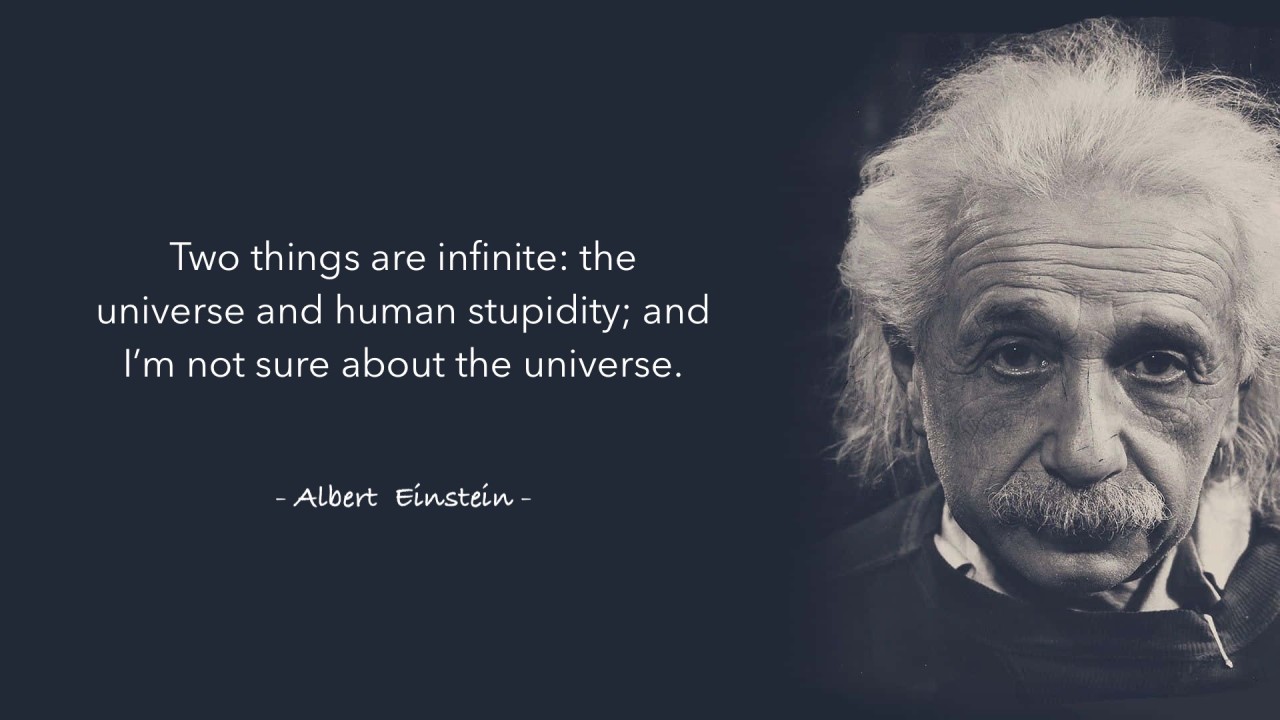
8. Defining the problem: Human Stupidity
If the pursuit of intellectual depth is the arduous search for comprehensive truth, then its inverse, human stupidity, is not merely a deficit of intelligence but an active failure to engage with the whole truth. We can define this modern intellectual failure as an acute lack of holistic knowledge.
This pervasive phenomenon arises when individuals or groups choose to prioritize and grossly overvalue a narrow, isolated aspect of a complex picture—a single fact, a convenient belief, or an emotionally satisfying opinion. Often driven by a short-term need for personal or communal validation and gain.
In doing so, they deliberately disregard the broader context, the necessary nuance, or the inconvenient long-term consequences. This is not ignorance born of circumstance, but an intellectual blindness born of choice. Stupidity reaches its zenith when this myopic focus hardens into powerful, divisive social structures, particularly the creation of a rigid “us versus them” narrative.
As Bertrand Russell observed, “The trouble with the world is that the stupid are cocksure and the intelligent are full of doubt.”
By championing a singular, advantageous viewpoint (the “us”) and summarily dismissing all others (the “them”) as incorrect, illogical, or even morally bankrupt, we successfully trade the difficult, messy reality of complexity for the simple, comforting certainty of tribal identity.
This is a profound failure of comprehensive reasoning: the active choice to remain willingly ignorant of the full scope of reality. This calculated intellectual short-sightedness allows simple, emotionally charged arguments to triumph easily over difficult, evidence-based truths.
The scary reality is that in our current environment, where attention is fragmented and conviction is rewarded, this form of deliberate simplification and division frequently wins, making human stupidity a potent and enduring force, even with an the AI-powered library at its disposal.
Conclusion: The tool, the will, and the cure
We have established that the scarcity of intellectual depth is not an information problem; it is a willpower and engagement problem. While Artificial Intelligence can help fill in information at lightning speed, providing the holistic context, interconnected data, and nuanced viewpoints to complete the entire puzzle, it is inherently passive. The individual human must first seek it. AI is a powerful reflection of the ‘human’ intention.
It cannot, by its existence alone, cure human stupidity because human stupidity, as defined here, is a state of being wilful and short-sighted. AI is like a knife; it is just a tool. It holds tremendous potential. It can be used to cut fruit (solve global problems, advance science) or to kill someone (disseminate deepfakes, automate propaganda).
The technology itself doesn’t possess the moral compass or the motivation for depth. It simply amplifies the intelligence or the foolishness that directs it. The greatest intellectual challenge of our time is not about engineering smarter machines; it is about engineering smarter, more humble human intentions.
Adding more CPU capacity is not going to make AI smarter (faster maybe), but removing human stupidity will.